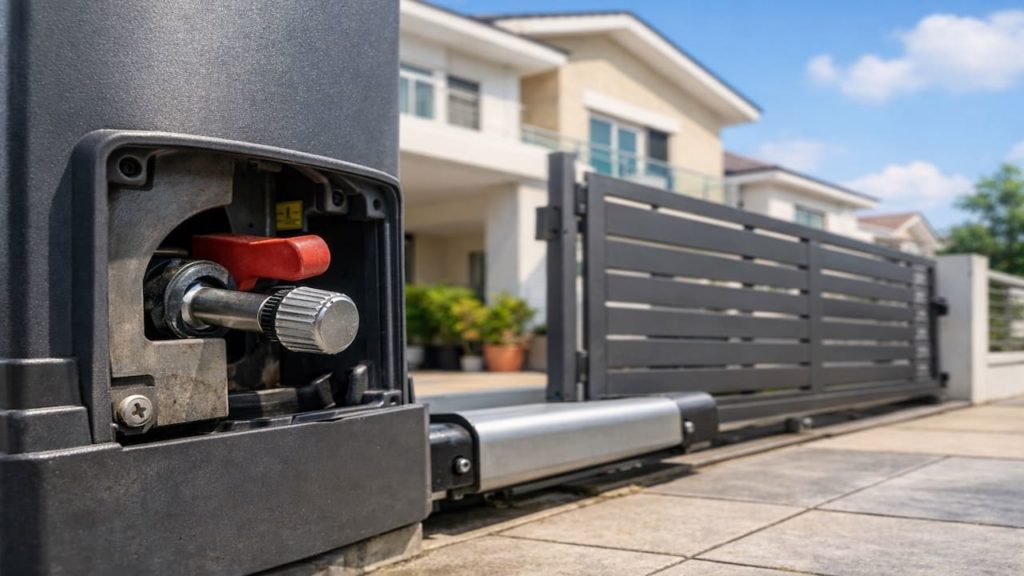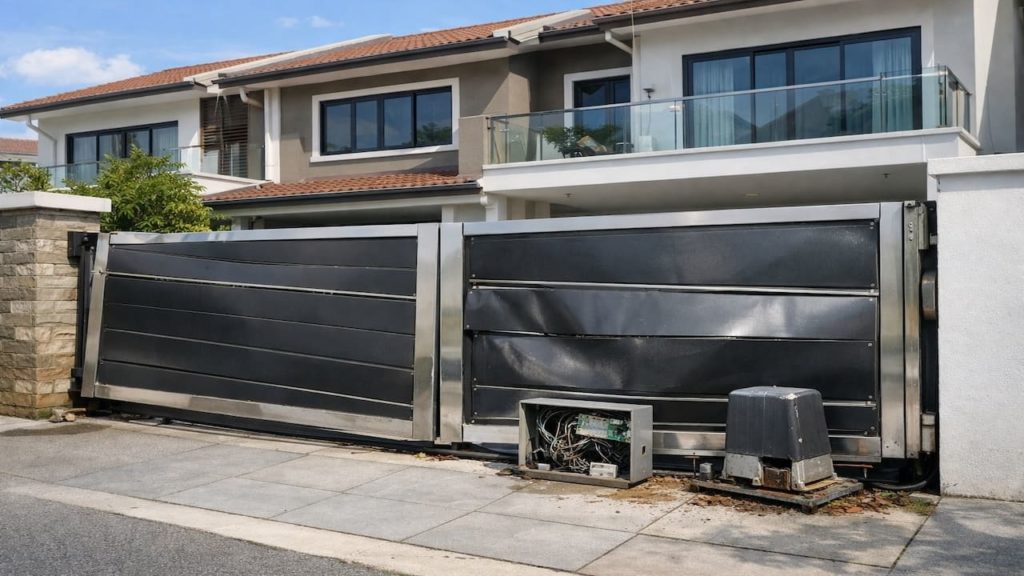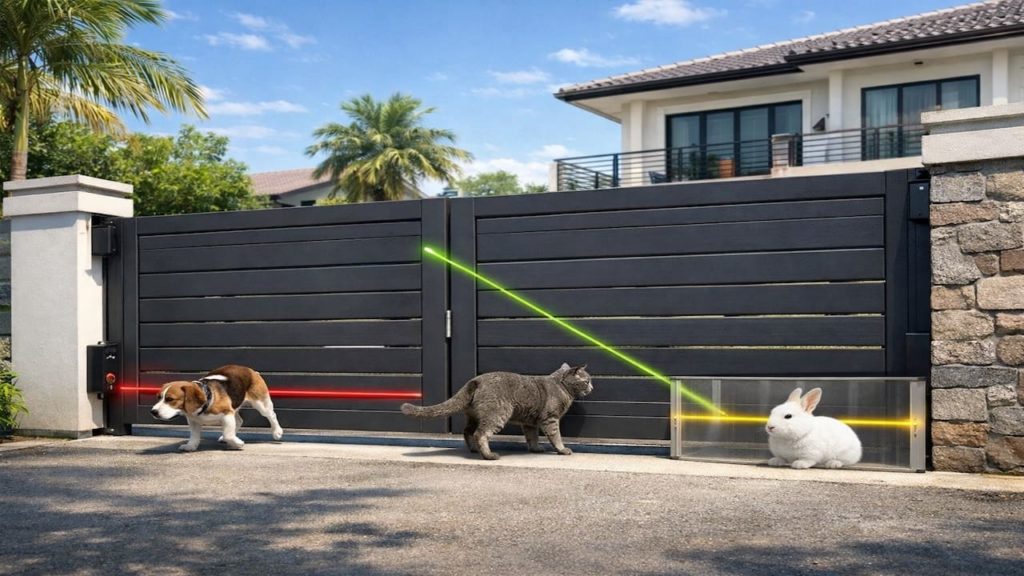
Your autogate reverses too easily, so it starts to close, then suddenly backs off like it hit something. In a Malaysia terrace house driveway, that means extra waiting and extra noise.
This can be caused by force sensitivity set too high, a safety sensor input that is noisy, or mechanical drag that tricks the controller into thinking there is an obstruction. Humid air and rainy season grime make false triggers more likely. Annoying.
In this guide, you’ll learn how to stop false reversing without making the gate unsafe by checking force sensitivity, finding obstruction false positives, and tuning the system for Malaysia heat and wet weather.

Hi, I’m Ken. I write practical home guides for Malaysia—no fluff, just what works.
I hold a formal building design qualification and have spent about 20 years on job sites across hundreds of projects. My goal is simple: help you avoid costly mistakes with clear, safe steps—a quick way to decide what to do next.
1. Autogate reverse too easily: 5 checks
False reversing means the controller senses danger too soon.
Most autogates reverse when safety inputs trigger or motor load spikes, and both can happen without a real obstacle in humid Malaysia conditions. Do not ignore it. Safety logic.
- Check safety LED status during closing cycle
- Clean photocell lenses and remove water film
- Test manual movement for drag and tight spots
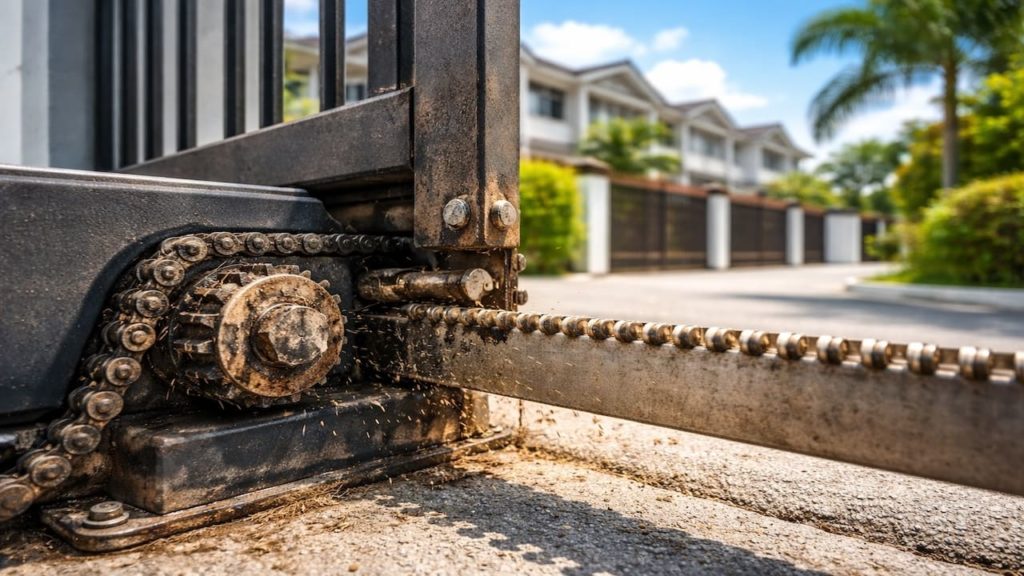
- Inspect track for sand paste and debris
- Check limit switch accuracy at close endpoint
You might think it is fine to raise force until it stops reversing—bad idea. If the gate reverses from a real obstruction later, you lose protection and create risk. Fix the trigger, then tune force last.
2. Force sensitivity & obstruction false positives
Wrong sensitivity setting can mimic a real obstruction.
When sensitivity is too high, a tiny load change becomes an obstacle signal, and Malaysia heat expands parts so friction rises in the afternoon. The controller reacts fast—sometimes too fast. Overreaction.
- Reduce sensitivity one step and retest closing
- Reduce closing speed slightly and confirm smooth travel
- Check motor current reading if controller supports it
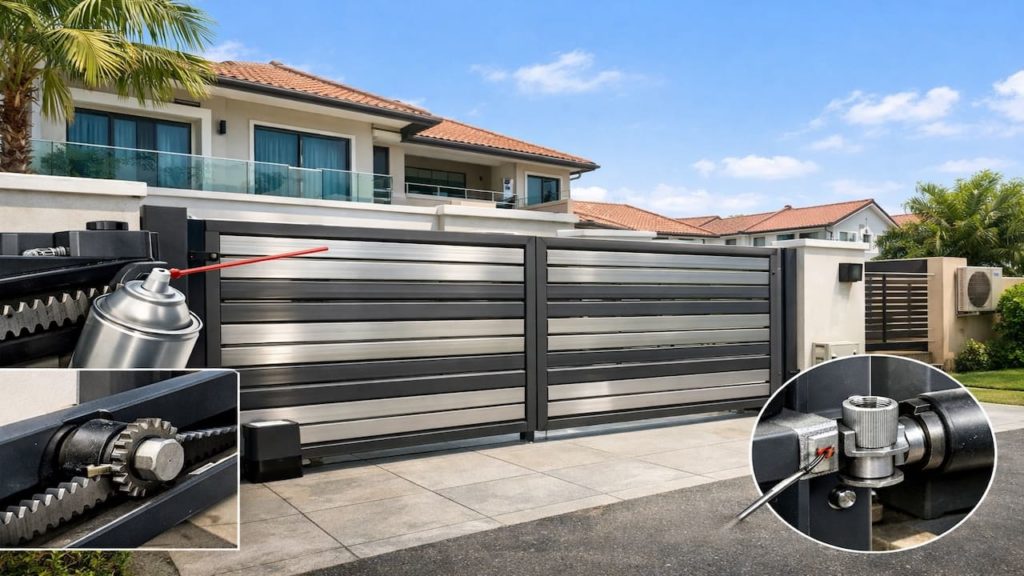
- Inspect arm joints for sticky grease and grit
- Confirm gate does not scrape post or latch
Some people assume “more sensitive is always safer,” and that sounds logical. But oversensitivity causes constant reversals and encourages dangerous bypass habits later. Set it so real obstacles trigger, while normal friction does not.
3. Why false reversing happens: moisture noise and mechanical load
Humidity creates noisy signals and heavier movement load.
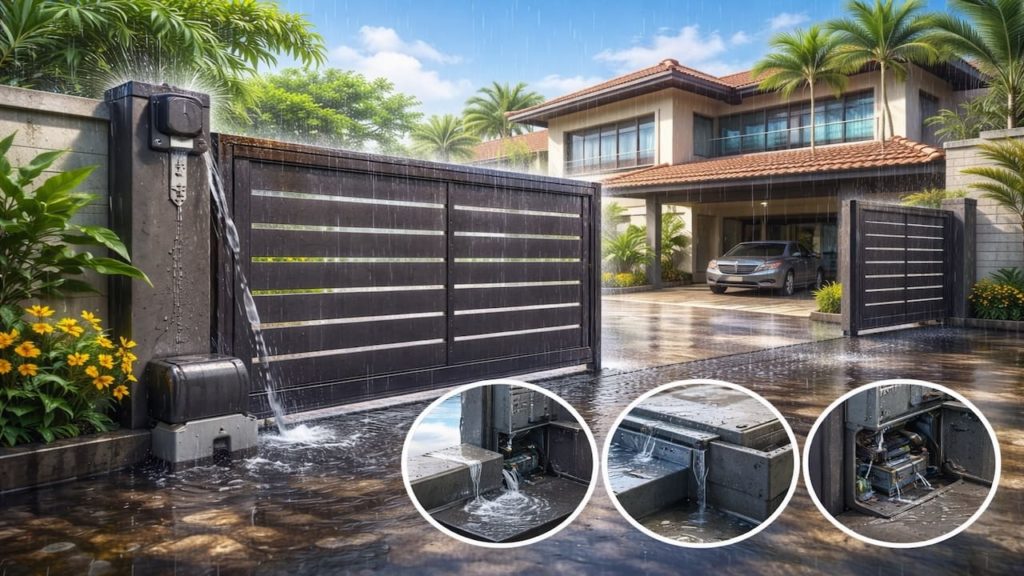
Malaysia rain leaves water film on sensors and terminals, and ants or corrosion can create phantom inputs that look like an obstruction. At the same time, sand and rust add drag, so the motor load spikes. Two paths.
- Inspect control box for moisture marks and rust
- Check sensor wiring for cracked insulation sections
- Look for ants debris near terminal screw points
- Check roller bearings for rough spin resistance
- Verify drainage does not splash into track area
You may think the weather is unrelated because it reverses on sunny days too—still connected. Moisture damage and dirt remain after the storm, then heat bakes it into sticky friction. Same outcome.
4. How to retune force safely and stop false trips
Tune force only after you remove drag and sensor noise.
Do the work in order so you do not mask a mechanical issue with stronger settings, especially in Malaysia where heat can push motors into thermal protection. One change at a time. Discipline.
- Clean track and dry it before tuning settings
- Realign photocells until LED shows stable link
- Set closing force to minimum that completes travel
- Set sensitivity to medium then test with safe block
- Relearn limits after any bracket or roller adjustment
You might worry that testing with a safe block is complicated, but it is the only honest way to verify reversal still protects people and vehicles. Tune for smooth daily use, then confirm safety behavior. No shortcuts.
5. FAQs
Q1. Why does my autogate reverse when nothing is there?
It usually reverses because a safety input triggers or the motor load spikes from friction. In Malaysia humidity, sensors can misread due to water film and terminals can become noisy.
Q2. Can sunlight or reflections cause false reversing?
Yes, bright angles can confuse photocells, and glossy condo floors can bounce the beam. It is worse after rain—because water changes the reflection pattern and sensor contrast.
Q3. Should I increase force so the gate stops reversing?
Only after you confirm the gate moves freely in manual mode and sensors are stable. Fix friction and sensor noise before raising force so you keep safe reversal when a real obstacle appears.
Q4. What is the quickest thing I can do today?
Clean and dry the photocell lenses, then clear sand and sludge from the track or hinge areas. After that, lower sensitivity one step and test a full close cycle twice.
Q5. When should I call a technician?
If the gate binds in manual mode, the post is moving, or the board shows persistent fault LEDs, get help. Also call if reversing happens with breaker trips or motor overheating.
Pro’s Tough Talk

I’ve been on site for 20+ years and handled hundreds of autogates, and “reverse too easily” is the one that drives people crazy. Malaysia humidity makes sensors act paranoid and makes metal parts drag. Loud and stupid.
It’s 3 causes again and again: sensitivity set too hair trigger, safety inputs noisy from water ants corrosion, and mechanical drag from sand rust bad grease. You didn’t fail, and not every installer is evil, but the system reacts to tiny signals like a drama queen.
Do 3 steps now: clean and dry the photocells, move the gate in manual mode to feel drag, then clear the tight spot and retest before touching force. If it still flips, check wiring noise at the receiver and board terminals.
Remove drag first then tune force last. Forcing it is like driving with the handbrake half on, and like running with a backpack full of wet towels. And if your solution is “just disable the sensors,” congrats, you just invented danger. One jab.
Two relatable moments: it reverses only when you are already late, so you press the remote again and make it worse. Then you promise you will fix it this weekend, and rainy season laughs at your calendar. Keep ignoring it and your gate will start training you instead.
Summary
When an autogate reverses too easily, it is usually reacting to sensor noise or a load spike, not a real obstacle. Malaysia rain and humidity make both false inputs and friction more common.
Your decision line is simple—if manual movement feels heavy, fix alignment rollers hinges and track first. If manual movement is smooth, focus on sensitivity settings, photocell stability, and receiver or board wiring integrity.
Clean and dry sensors today then tune sensitivity in small steps and verify reversal still works with a safe test. Next, read our guide on autogate squeals in heat to remove friction sources that trigger false obstruction signals.