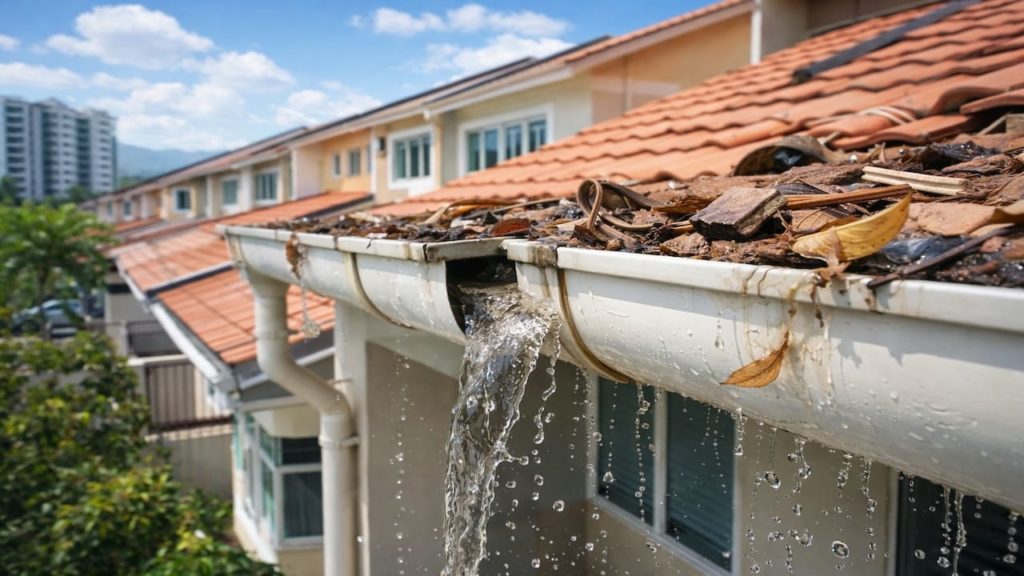
You just finished renovation work and now the gutter overflows, which feels unfair because the house should be better, not messier, in Malaysia rain.
After construction, fine debris, paint dust, and shifted brackets can block outlets or change slope, and humid storms expose those small mistakes fast. Post-work trouble.
In this guide, you’ll learn the 5 reasons gutters overflow after renovation so you can spot debris, confirm alignment, and stop repeat spills before the next rainy week.

Hi, I’m Ken. I write practical home guides for Malaysia—no fluff, just what works.
I hold a formal building design qualification and have spent about 20 years on job sites across hundreds of projects. My goal is simple: help you avoid costly mistakes with clear, safe steps—a quick way to decide what to do next.
1. Gutter overflow after renovation: 5 reasons
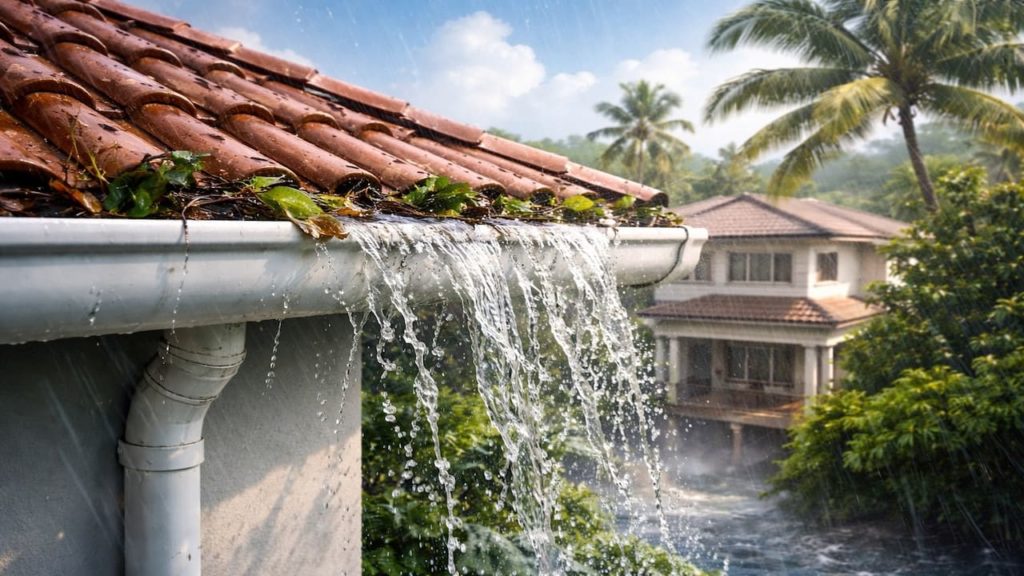
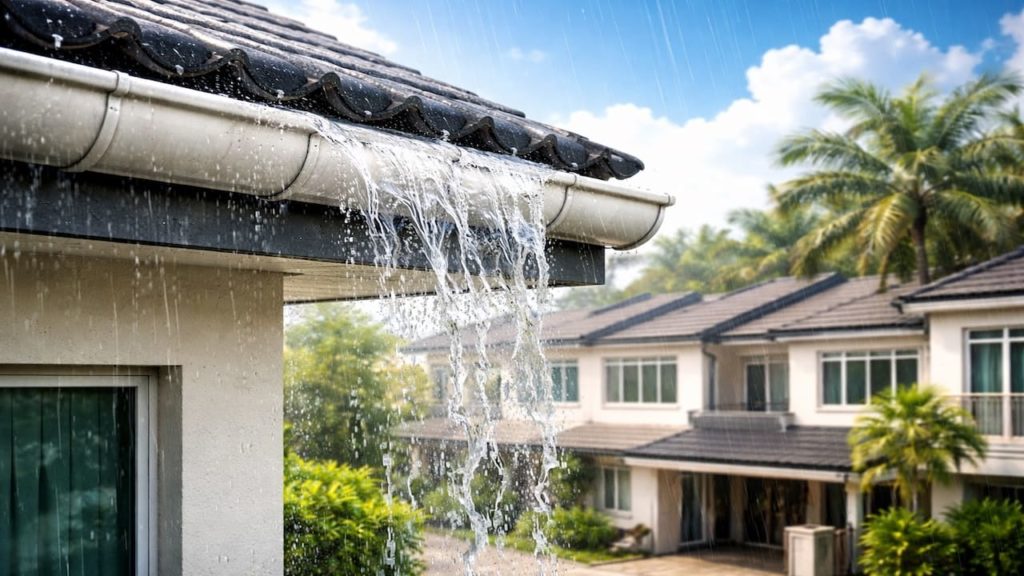
Renovation overflow usually comes from hidden debris and shifted gutter geometry and it often happens on one side first. Common.
Malaysia heat and sudden downpours make gutters work at peak flow, so any leftover dust or a small misalignment becomes overflow quickly—especially at corners and outlets.
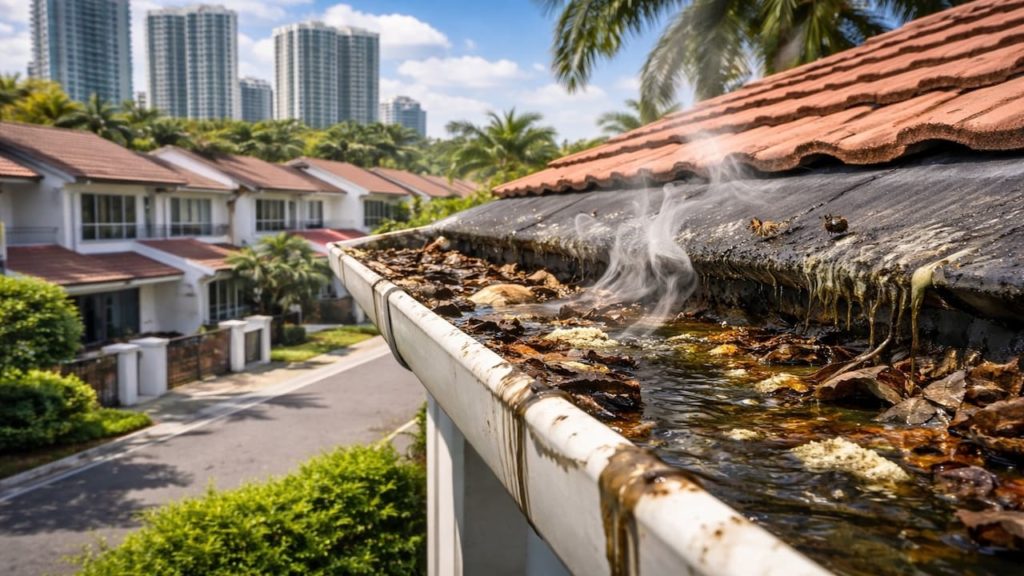
- Roof grit blocks outlet and slows drainage
- Paint dust forms sludge at elbow
- Bracket shift creates new low spot
- Gutter gap opens behind back edge
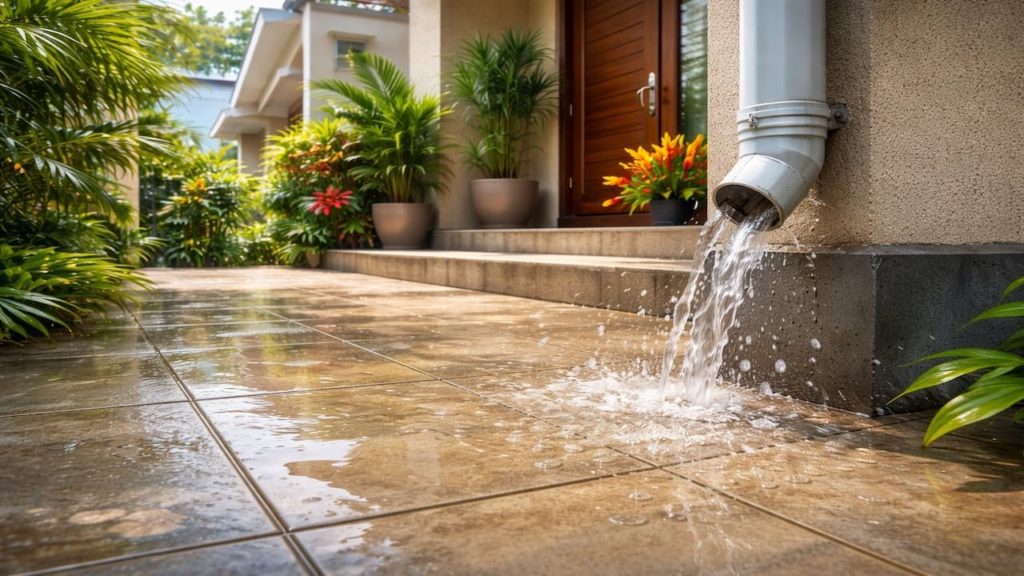
- Downpipe discharge blocked by renovation waste
You might think the gutter was fine before, so it cannot be the cause now. Renovation changes loads and adds debris, so the system behaves differently.
2. Debris and misalignment after work
Post-renovation problems are mostly debris and misalignment, not rain volume and you can confirm them with simple checks. Direct.
Construction dust compacts like mud in humid weather, and ladders or scaffold bumps can twist a run just enough to create a dip—then water sits and spills.
- Check outlet mouth for cement dust crust
- Check first elbow for compacted sludge ring
- Check gutter slope using string line
- Check bracket tightness along problem run
- Check fascia gap where water runs behind
You may want to seal seams immediately, but if debris is raising water level, sealant will not stop overflow pressure. Clear and align first.
3. Why renovation work triggers overflow in Malaysia homes
Renovation triggers overflow because gutters get contaminated and disturbed and humid storms arrive before the system is cleaned and reset. Timing.
Tile cutting, sanding, repainting, and roof edge work all create fine particles that wash into gutters. In Malaysia humidity, that dust binds together and clogs faster than leaves.
- Dust and sand wash into gutter corners
- Protective sheets funnel debris into outlet
- Temporary roof works change runoff direction
- Scaffold contact loosens brackets and slope
- Downpipe ground drain fills with renovation grit
Some people say the contractor should handle it, and they should, but you still need a quick verification so damage does not spread before warranty talks begin.
4. How to reset gutter flow after renovation
Reset post-renovation gutters by proving discharge and restoring slope so the next storm does not restart the mess. Simple routine.
Choose a dry day because Malaysia surfaces get slippery fast. Use a controlled pour test and focus on the outlet and first elbow, because that is where dust plugs usually form.
- Do controlled pour test near outlet
- Scoop outlet debris and corner sludge
- Open elbow and remove packed sediment
- Tighten brackets and correct sagging dip
- Retest discharge and confirm fast flow
You might think a power flush is best, but blasting can push dust deeper into elbows. Controlled clearing is safer and gives cleaner proof.
5. FAQs
Q1. How soon can gutters overflow after renovation?
It can happen on the first heavy rain, especially if dust and grit washed into outlets. Malaysia storms make the system hit peak flow immediately.
Q2. What renovation activities cause the worst gutter clogs?
Roof edge work, tile cutting, sanding, and repainting create fine particles that compact into sludge. Those particles clog elbows faster than leaves.
Q3. What should I ask the contractor to check?
Ask for outlet and elbow clearing plus a pour test and photo proof. Strong discharge is the acceptance test after renovation cleanup.
Q4. Why does water run behind the gutter after renovation?
Gutters can be rehung slightly lower or further from the roof edge, or the drip edge overlap changed. That makes runoff miss the trough and wet the fascia line.
Q5. When should I escalate to repair or rehanging?
If overflow continues after outlet and elbow clearing and the gutter still pools, the slope or alignment likely shifted. Rehanging or adding brackets may be needed.
Pro’s Tough Talk

I’ve been on site for 20+ years and handled hundreds of jobs, and post-renovation overflow is so common it is almost a tradition. Malaysia rain arrives like an inspector, and it fails you the moment dust hits water.
Cause is 3 buckets: construction dust turns into sludge, elbows choke first, and brackets get bumped so the run sags. Steps are 3 too: prove discharge with a controlled pour, clear the outlet and elbow by hand, then tighten brackets and restore slope so water cannot sit. Everybody has the “the house is new why is it leaking” moment, and everybody has the “they said they cleaned up” moment.
Here’s the truth, renovation debris is a clog factory. Dust sticks like wet cement in a bend, and overflow spreads like soap across tiles in humid heat. One jab: the guy who says “finish already” but skips gutter testing is doing theater. Reset the flow now, or enjoy your new renovation with old problems.
Summary
Gutter overflow after renovation is usually caused by fine debris and dust clogs, elbow restrictions, shifted brackets creating dips, and changed alignment at the roof edge. Malaysia storms expose these issues immediately.
Start by proving downpipe discharge with a controlled pour, then clear outlets and elbows, correct sagging slope, and confirm the gutter catches runoff correctly. Use photo proof and written scope if a contractor is responsible.
Run the pour test and clear the first elbow this week—a clean aligned gutter protects your new finish and prevents stains and damp patches from returning.