You cleaned the gutter before, but it still overflowed, started leaking, or got noisy again after the next heavy rain.
In Malaysia, humid heat makes sludge stick, wet-season storms test every joint, and condos and terrace houses punish shortcuts fast. No mercy.
In this guide, you’ll learn the common gutter cleaning traps so you avoid damage and make your cleaning last longer.

Hi, I’m Ken. I write practical home guides for Malaysia—no fluff, just what works.
I hold a formal building design qualification and have spent about 20 years on job sites across hundreds of projects. My goal is simple: help you avoid costly mistakes with clear, safe steps—a quick way to decide what to do next.
1. Gutter cleaning mistakes: 5 traps
The biggest mistake is cleaning the easy parts only while leaving the outlet and low spots that cause the next overflow.
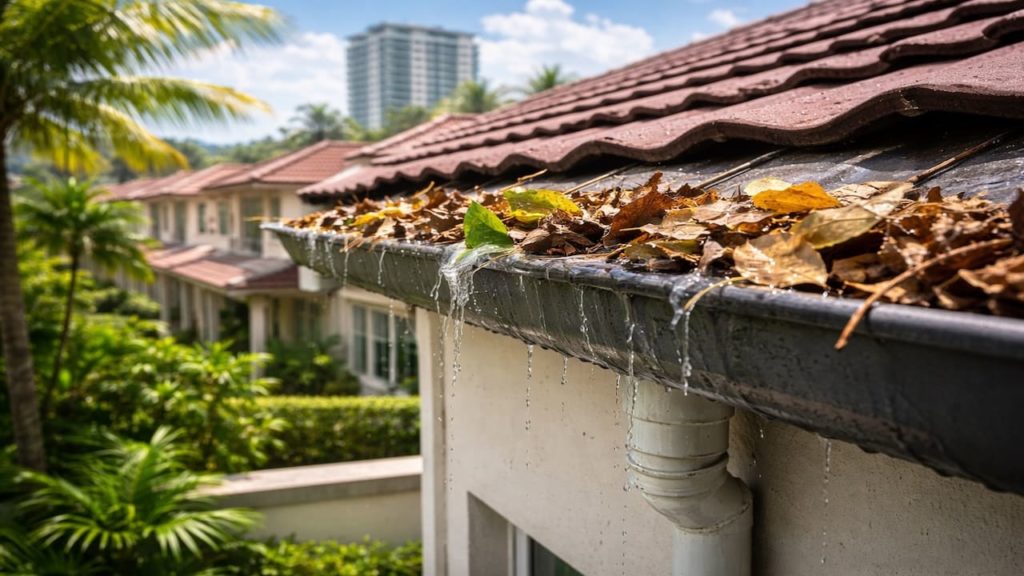
Malaysia rain intensity exposes weak flow fast—so a “looks clean” gutter can still back up when the downpipe mouth is half blocked. Classic. Another trap is rushing when surfaces are damp and slippery. Bad timing.
- Scooping the middle run but ignoring the downpipe mouth and first elbow where sludge packs tight.
- Leaving sagging sections unchanged so water still ponds and breeds algae and mosquitoes.
- Forcing debris into the outlet so it disappears from sight but clogs the downpipe later.
- Cleaning during light rain or high humidity so sealant and joints stay wet and get disturbed.
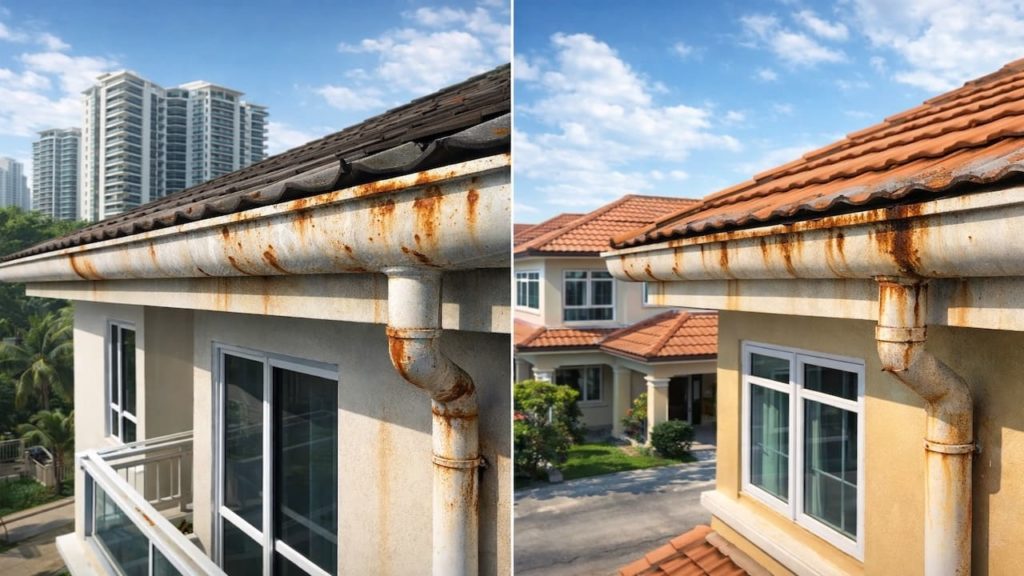
- Using sharp tools that scratch coatings and start rust spots within weeks in tropical air.
Some people think they failed because they did not clean enough, but the real issue is where they cleaned. Focus on outlets and ponding points and the result lasts.
2. Avoid damage and make it last longer
Clean in a way that protects joints and coatings so you stop repeat leaks, rust, and wall stains after storms.
Malaysia humidity makes metal and PVC expand and relax, so rough handling loosens clips and opens seams. Gentle beats aggressive. Work in dry windows so you can test flow safely and confirm results.
- Start at the outlet area and pull debris away from the opening, then bag it so it cannot wash back in.
- Flush with low pressure water to move fine grit toward the downpipe instead of blasting joints apart.
- Use gloves and a plastic scoop, not a metal scraper that gouges paint and creates future corrosion points.
- After clearing, run water for 30 to 60 seconds and verify strong downpipe discharge on the ground.
- If you see a sag, tighten or add a bracket so your cleaning does not end with a new pond.
People want a one-time deep clean, but drainage needs proof. If you cannot confirm steady discharge, the job is not done yet.
3. Why these cleaning traps happen in Malaysia
Tropical weather turns small errors into fast failures because wet debris compacts and joints are stressed by intense storms.
Hot sun bakes the gutter, then sudden rain cools it, and that cycling loosens small fasteners. When you clean roughly, you accelerate the looseness. Humidity also keeps grime sticky, so debris traps rebuild quickly if you miss them.
- Leaf bits become paste and glue themselves at bends, making partial clogs that surge during storms.
- Algae film makes fine sand stick, so micro layers build even when you cannot see them.
- Frequent rain prevents drying, so your gutter stays heavier and sag points worsen over time.
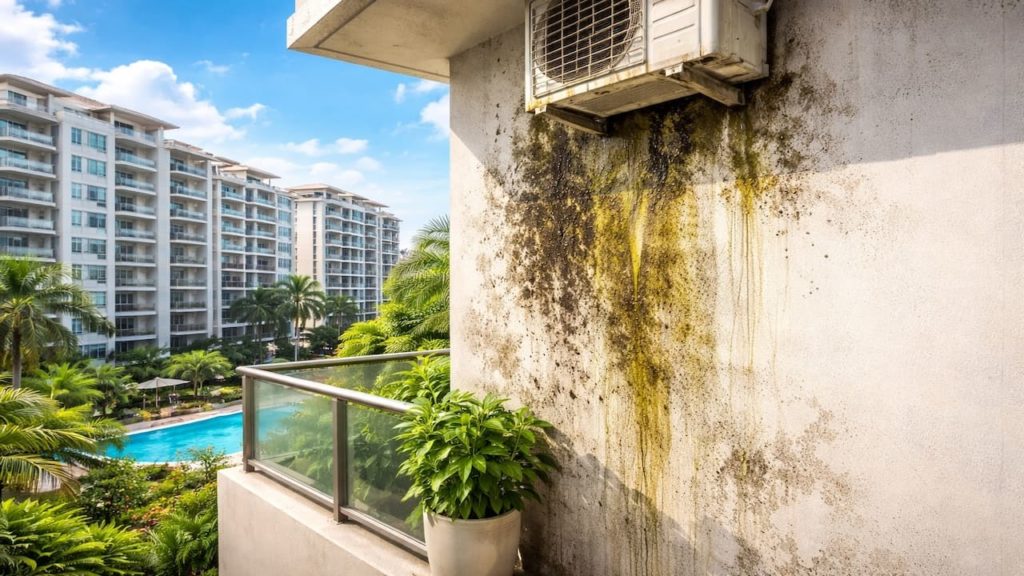
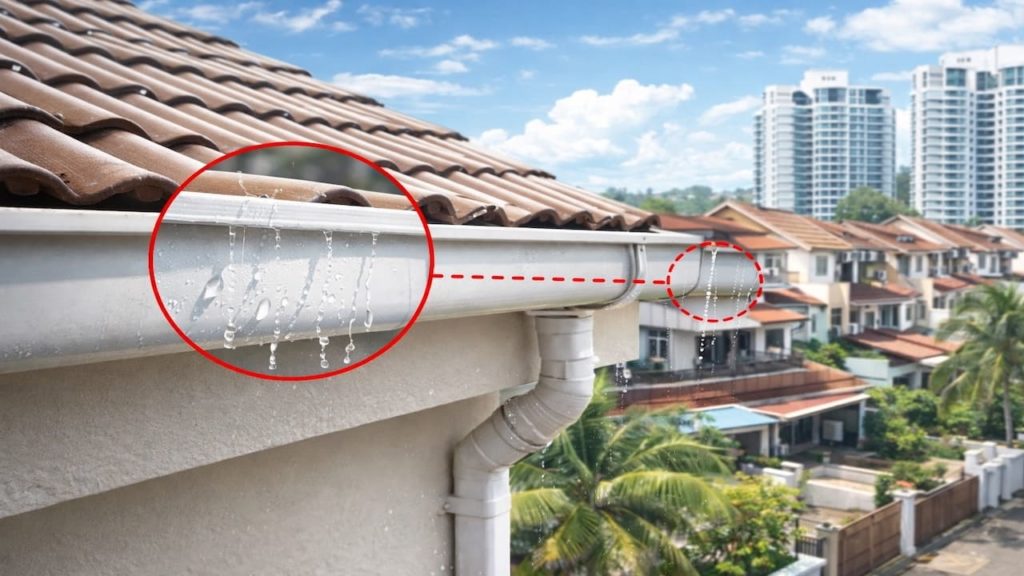
- Wind-driven rain pushes water behind the gutter, so small joint gaps create wall stains and mold paths.
- Condos often have long gutter runs, and terrace houses often have roof valleys that overload one corner.
It is not that you are doing nothing. The conditions are harsh. Clean smarter and you keep ahead.
4. How to clean correctly and extend the result
Use a repeatable routine that targets the failure points so your gutter stays quiet, drains fast, and does not stain walls.
Plan around Malaysia weather: work only in dry breaks, do quick post-storm checks, and treat outlets and corners as priority zones. The goal is fewer emergencies and fewer risky climbs. Simple structure.
- Before cleaning, mark the first overflow or drip spot after rain, then inspect that exact section during the next dry window.
- Remove debris starting at the downpipe mouth, then work upstream so you do not push junk into the pipe.
- Flush the downpipe from the bottom with gentle pulses to clear sludge without needing roof access.
- Check brackets for looseness and fix sagging so water cannot pond where algae grows.
- After cleaning, retest with water and confirm no pooling remains for 10 to 15 minutes.
If the gutter still overflows after this, it may be undersized or badly sloped. That is a design issue. Adjusting support or calling a pro is the next step.
5. FAQs
Q1. Can a pressure washer make gutter problems worse?
Yes, high pressure can blow apart joints, lift guards, and push debris into the downpipe. Use gentle hose flow first and test discharge.
Q2. Why does my gutter overflow right after I cleaned it?
You may have pushed debris into the downpipe, or missed a sag pond that still backs up. Check outlet flow and ponding after rain.
Q3. What is the safest way to clear a downpipe without climbing?
Work from the outlet on the ground using hose pulses and a flexible plastic snake. Safe ground-level clearing beats risky ladders in wet humid conditions.
Q4. Should I use bleach or chemicals to “sanitize” the gutter?
It can reduce smell short term but does not remove sludge or fix drainage. Physical removal and flow testing are what last.
Q5. How do I make cleaning last longer during rainy season?
Check outlets every 2 weeks, rinse every 4 to 6 weeks, and fix sagging early. Maintenance rhythm matters more than one big cleanup.
Pro’s Tough Talk

I’ve been on site for 20+ years and handled hundreds of gutters in tropical heat and wet-season rain. The funniest thing is watching people clean the gutter like they are sweeping a floor. Then they wonder why it overflows again. Different game.
Three causes behind the “it came back” problem: you missed the outlet choke, you left the sag pond, or you shoved junk into the downpipe like stuffing trash into a bottle. Steps: clear the outlet first, flush and confirm steady discharge, then brace the low spot so water cannot sit.
Don’t blame yourself, and don’t call every contractor useless, but some advice online is pure fantasy. You know the two classics: you finish cleaning, it rains that night, and you hear the same drip, and you go “what was the point.” Clean the failure points and it lasts or keep repeating the same job like you enjoy punishment.
Summary
Gutter cleaning fails when you ignore the outlet, push debris into the downpipe, or leave sagging ponds that refill with sludge. Malaysia makes those mistakes show fast.
Clean from the outlet outward, use gentle flushing, confirm strong discharge, and fix support so water drains fully. If overflow continues, suspect slope or sizing.
Do one outlet check after the next storm, clear the mouth, and retest flow for a full minute. Smart cleaning prevents repeat damage and next read about downpipe blockage checks and storm overflow reasons.