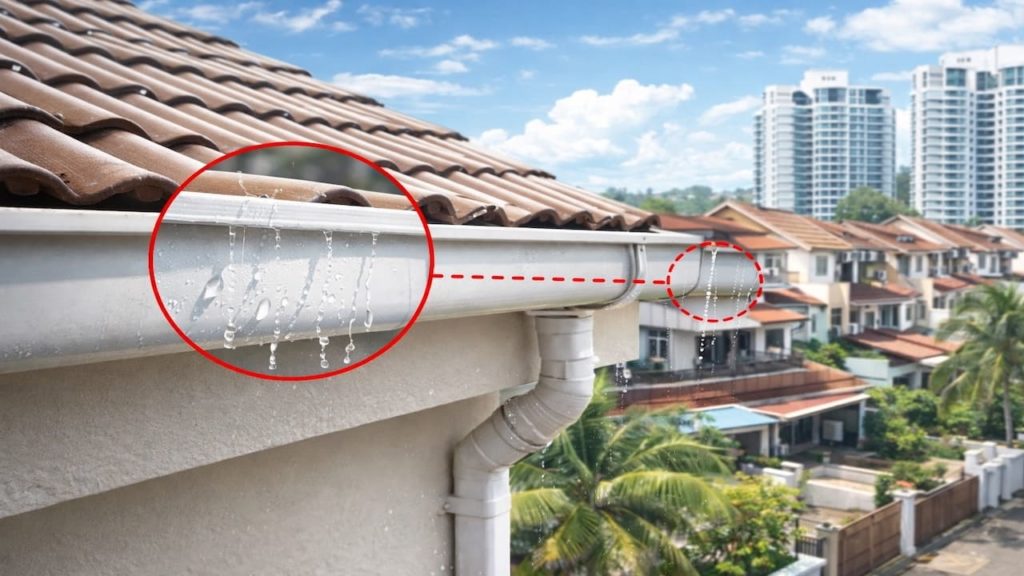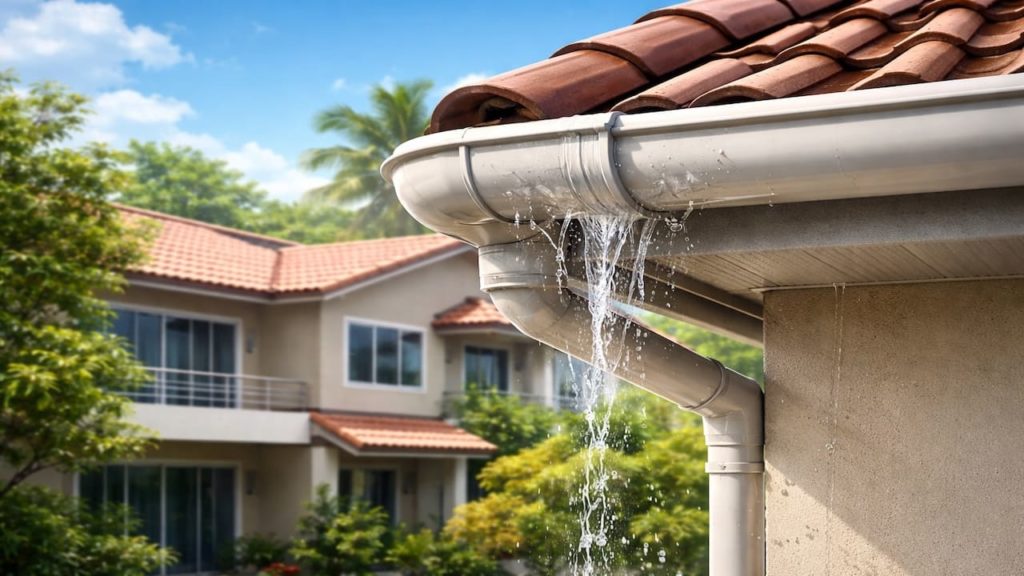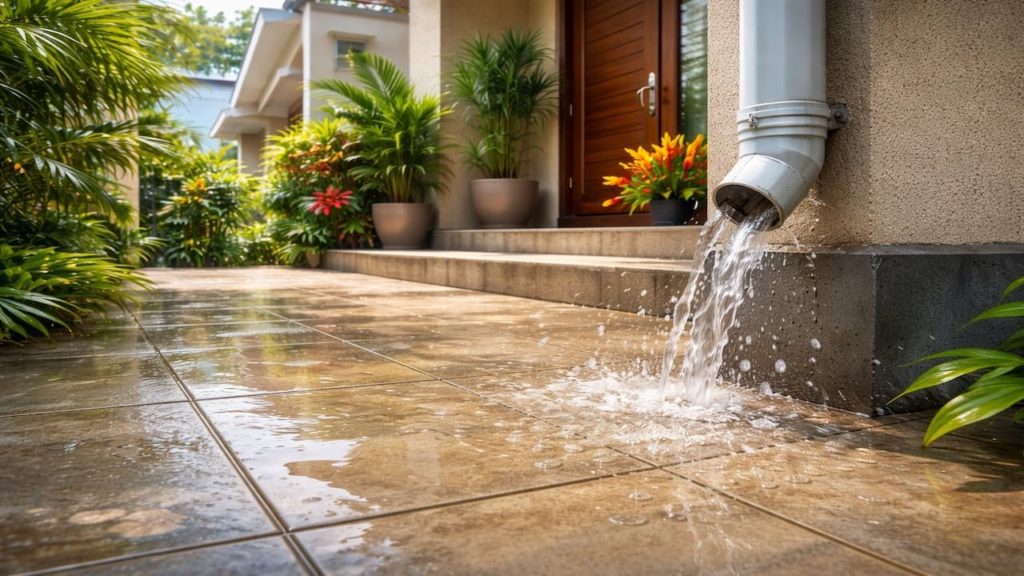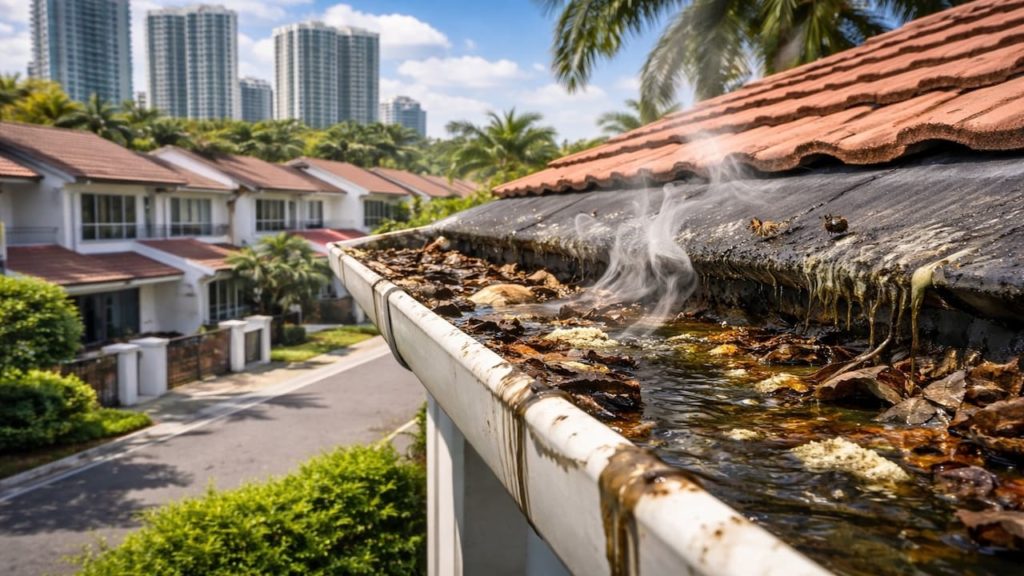
You see water backing up in the gutter, overflowing mid-run, or barely dripping from the downpipe outlet after a heavy rain.
In Malaysia, wet-season bursts push debris fast, and humid heat turns leaf bits into sludge inside pipes on condos and terrace houses.
In this guide, you’ll learn how to check a blocked downpipe safely and clear drainage without risky climbing.

Hi, I’m Ken. I write practical home guides for Malaysia—no fluff, just what works.
I hold a formal building design qualification and have spent about 20 years on job sites across hundreds of projects. My goal is simple: help you avoid costly mistakes with clear, safe steps—a quick way to decide what to do next.
1. Gutter downpipe blocked: 5 checks
You can confirm a downpipe blockage from the ground by watching flow and listening for the right signs.
Do the checks right after rain or during a safe dry break—fresh evidence saves time in Malaysia’s sudden weather.
- Look at the downpipe outlet: weak trickle after strong rain suggests restriction upstream.
- Check the gutter near the outlet: it stays full longer than other sections.
- Listen for gurgling at the outlet when you pour water into the gutter run.
- Notice overflow that happens near the downpipe, not at the far end.
- Tap the pipe gently and hear a dull “packed” sound instead of hollow.
“Maybe the rain was too strong” is easy to say, but the outlet flow tells the truth. Confirm first, then clear.
2. Clear drainage without risky climbing
Start from the bottom because it is safer and most blockages sit near bends and the base in humid conditions.
Malaysia tiles get slippery and ladders wobble in wet air, so keep your feet on stable ground whenever you can. Smart move.
- Put a bucket under the outlet, then flush upward with a hose for short pulses.
- Massage the pipe lightly where the first bend is, helping sludge break free.
- Use a flexible plastic drain snake from the outlet, never sharp metal rods.
- Stop if water backs up, then repeat pulse and release until flow turns strong.
- After clearing, run water for 30 to 60 seconds and confirm steady discharge.
If the outlet is too high to reach safely, do not force it. Call help and save your bones.
3. Why downpipes block in Malaysia
Blockages form when wet debris compacts inside the pipe and Malaysia keeps that debris wet and sticky.
Heat breaks leaves into fibers, rain pushes grit, and algae glues it together—then one storm finishes the plug.
- Leaf bits and seed pods slip past gutter lips and lodge at the first elbow.
- Roof grit mixes with algae and becomes heavy sludge in constant humidity.
- Small outlet screens clog and push debris into the pipe instead of stopping it.
- Infrequent cleaning lets layers build until flow narrows to a thin channel.
- Construction dust or paint flakes can drop in and harden after sun exposure.
This is not random. It is a slow build, then a sudden failure.
4. How to prevent repeat downpipe blockages
Keep the pipe clear by controlling what enters and by testing flow after big storms in wet months.
A 2 minute check beats a full overflow cleanup, especially in Malaysia’s rainy season rhythm. Easy habit.
- Clean the gutter outlet area first, because it feeds the downpipe like a funnel.
- Install a simple outlet guard that you can remove and rinse regularly.
- After major rain, check that the outlet discharge is strong, not just “some.”
- Flush the pipe lightly every 4 to 6 weeks during wet season if trees are nearby.
- Fix sagging gutters so debris does not pool and sink into the outlet opening.
Guards are helpful, but routine wins. Keep flow strong and the pipe stays boring.
5. FAQs
Q1. How can I tell if the blockage is in the gutter or the pipe?
If the gutter near the outlet is full and the downpipe outlet is weak, the pipe is likely restricted. If the outlet is clear but water pools mid-run, look for a gutter sag or leaf dam.
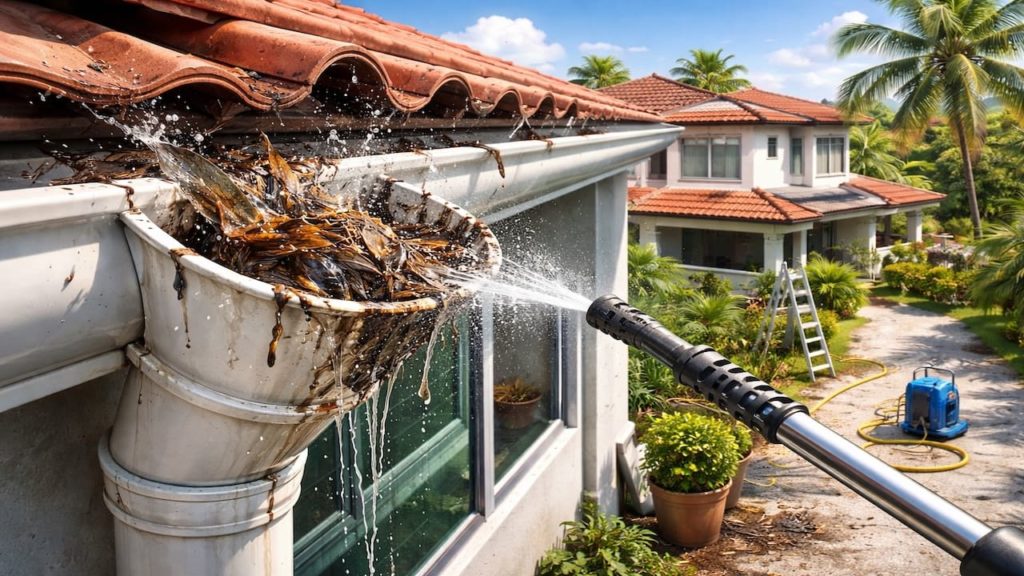
Q2. Is it okay to use a pressure washer?
It can blow joints apart or splash dirty water back. Use gentle hose pulses first and keep pressure controlled.
Q3. What is the safest DIY method?
Work from the outlet at ground level with short hose pulses and a flexible plastic snake. Avoid ladders in wet humid conditions unless you have proper stability.
Q4. Why does it block again after I clear it once?
You may have only opened a small channel through sludge. Flush longer and clean the gutter outlet area so new debris does not feed the plug.
Q5. When should I call a pro?
If the downpipe is high, you suspect broken joints, or repeated blockages happen, call. Access and alignment matter.
Pro’s Tough Talk

I’ve been on site for 20+ years and handled hundreds of gutters and pipes in tropical heat and wet-season madness. A blocked downpipe is like a stuffed nasi lemak packet in a straw. Water has nowhere to go, so it goes where you hate it.
Three causes: gunk packed at the elbow, sludge built up over months, or a tiny guard that turned into a plug. Three steps: flush from the bottom in short bursts, snake with flexible plastic, then confirm strong outlet discharge for a full minute. Do it steady, not angry.
Don’t blame yourself, and don’t call every installer useless, but some setups are begging to clog. You know the “real life” moment: rain hits, you hear overflow, you step out in slippers, and you regret everything. Clear it from the ground and keep it flowing or enjoy the wet walkway slip-and-slide like it’s your weekend sport.
Summary
Downpipe blockages show up as weak outlet discharge, a full gutter near the outlet, and overflow close to the pipe. Malaysia’s humidity turns debris into sticky sludge.
Confirm the blockage with safe ground-level checks, then clear from the bottom using hose pulses and flexible tools. Prevent repeats by cleaning the outlet area and testing flow after storms.
Do one outlet flow test after the next rain and clear any weak discharge immediately. Safe checks beat risky climbs and next you should read sagging warning signs.