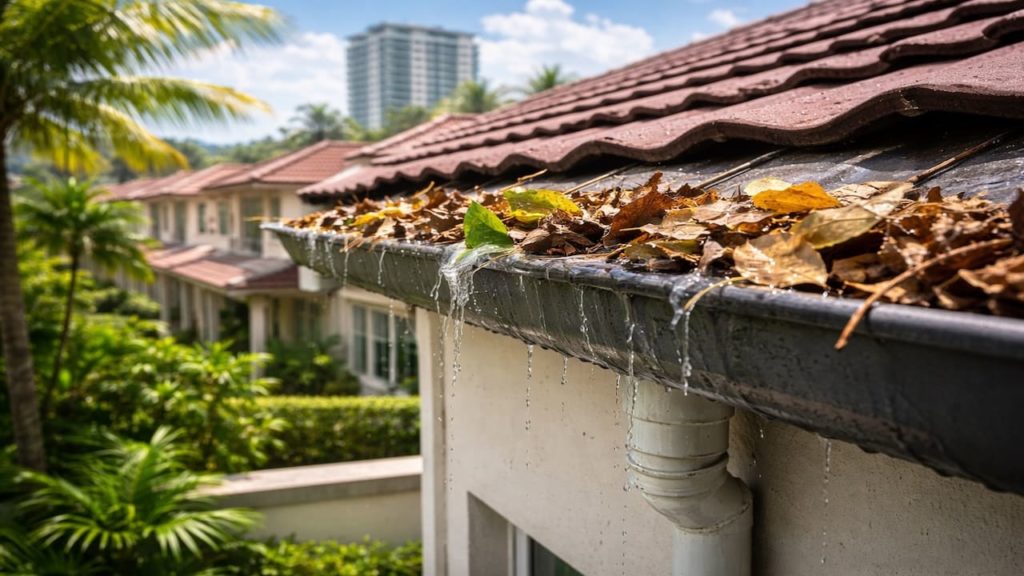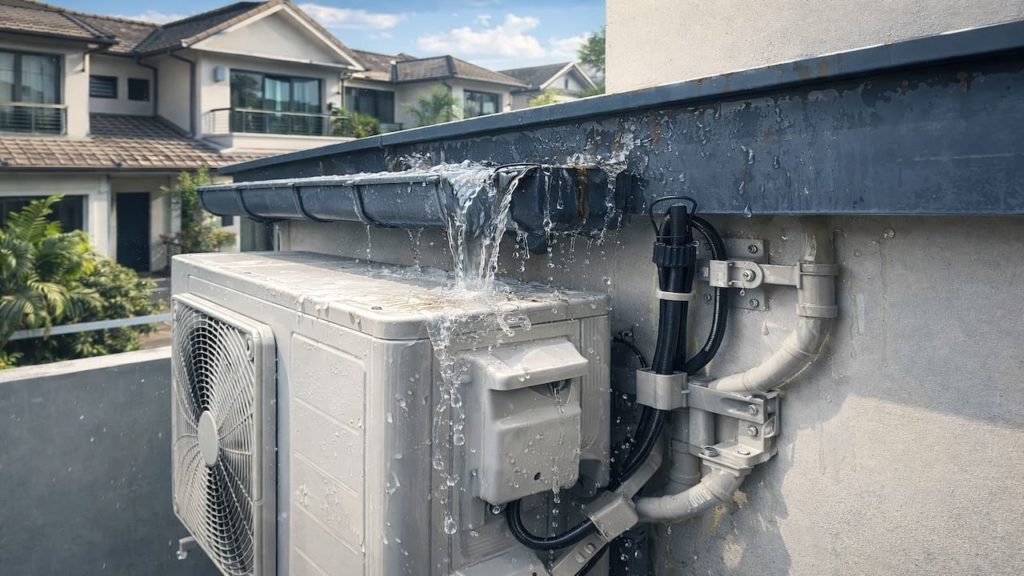
You see gutter overflow near your AC outdoor unit, and you worry about water hitting wiring, brackets, and the wall during Malaysia storms.
In heavy rain and high humidity, repeated splash can loosen mounts, corrode brackets, and push water toward cable entry points, even if the AC itself keeps running. Hidden risk.
In this guide, you’ll learn the 5 checks that reduce overflow splash near AC outdoor units so you can protect wiring paths, stabilize brackets, and keep runoff controlled.

Hi, I’m Ken. I write practical home guides for Malaysia—no fluff, just what works.
I hold a formal building design qualification and have spent about 20 years on job sites across hundreds of projects. My goal is simple: help you avoid costly mistakes with clear, safe steps—a quick way to decide what to do next.
1. Gutter overflow near AC outdoor: 5 checks
Start by proving where the overflow lands and why it happens there because AC areas are often under corners and downpipes.
Malaysia wind-driven rain can throw water sideways, and one clogged outlet or sag can turn into a spray right onto the AC wall. Trace the splash pattern after a storm. Clear evidence.
- Look for splash marks on the wall behind the outdoor unit and on the unit top
- Check the gutter corner or outlet above for sludge sand nests or compacted grit
- Watch the downpipe discharge for weak flow that suggests elbow restriction
- Check if the gutter holds water after rain which points to a sagging low spot
- Inspect nearby joints and end caps for spray leaks that mimic overflow
You might think the AC is the issue, but this is usually a drainage geometry problem. Fix the gutter flow and the AC area becomes calmer immediately.
2. Protect wiring and brackets from water
Protect AC wiring and brackets by controlling splash direction and drying the wall because constant wetting accelerates corrosion and loosens anchors.
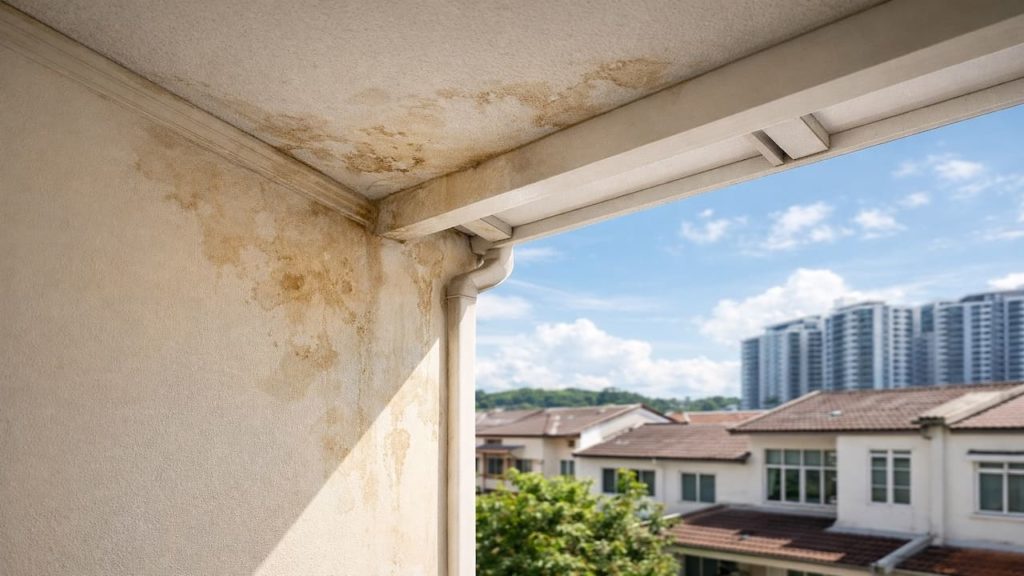
Outdoor unit brackets and wall anchors do not love repeated soaking, especially with salty air near coasts and constant humidity. Wiring entry points can also wick moisture if water hits them daily. Slow damage.
- Check the wall penetration point for cable and pipe lines and ensure it is sealed
- Inspect bracket bolts for rust and confirm the unit does not wobble when pushed gently
- Ensure downpipe discharge is not splashing upward onto the bracket zone
- Add a temporary splash shield only after you confirm the gutter drains strongly
- Keep the ground drain clear so discharge does not pool and soak the wall base
You may want to cover the unit with plastic, but that can trap heat and moisture. Better is controlling the water path and keeping the wall dry.
3. Why overflow near AC areas is common in Malaysia homes
Overflow near AC outdoor units is common because units sit under roof corners and corners receive high volume runoff from valleys.
Many condos and terrace houses place outdoor units along side walls where downpipes also run. That concentrates both water and hardware in one zone—bad combination when drainage is weak. Layout reality.
- Roof corner runoff dumps high peak flow into one gutter section above the unit
- Outlet screens clog with fine sand even when no leaves are visible
- Downpipe elbows trap sludge and reduce discharge strength after storms
- Sagging brackets create pooling so overflow spills over the lip toward the wall
- Wind-driven rain turns minor overflow into wide spray across the AC wall
Some people assume overflow is unavoidable near the AC. Not true. Strong discharge and correct slope usually stop the spray pattern.
4. How to reduce overflow and spray without risky work
Reduce overflow by clearing choke points and redirecting discharge away from the unit so the AC wall stops getting hammered during storms.
Work only when dry and avoid ladders on wet tiles in Malaysia humidity. Safety first. Focus on the outlet, elbow, and discharge direction, because those give the biggest improvement with the least climbing. Practical focus.
- Do a controlled pour near the outlet and stop if water rises fast in the gutter
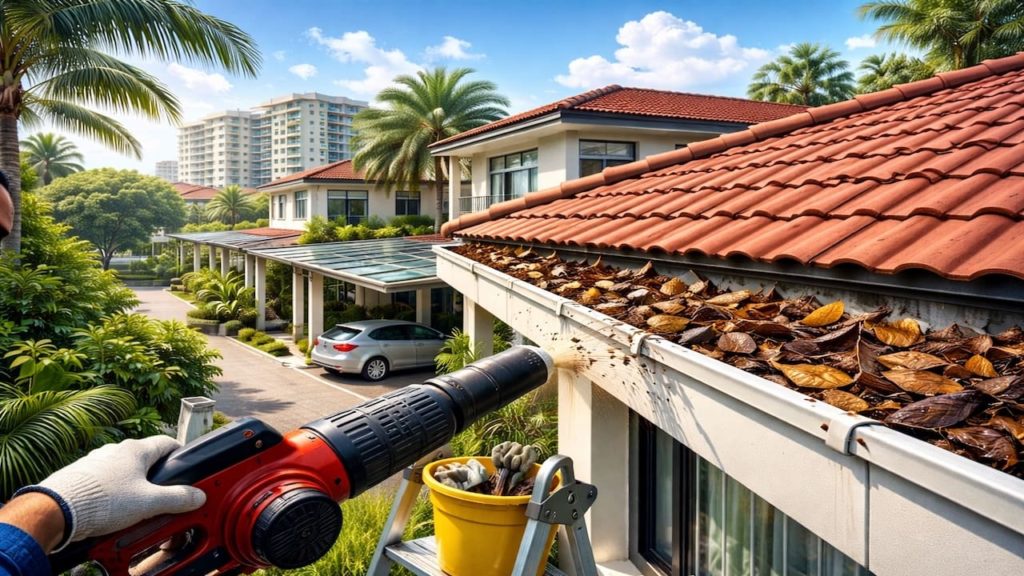
- Clear compacted grit at the outlet and check the first elbow for sludge plugs
- Tighten loose gutter brackets near the corner to remove pooling and overflow
- Redirect downpipe discharge away from the AC wall using a simple elbow extension
- Retest after the next rain by checking if wall splash marks stop expanding
You might think resealing joints is the main fix, but overflow pressure can beat any sealant. Restore flow first, then seal only if a seam is still weeping.
5. FAQs
Quick answers for gutter overflow near AC outdoor units in Malaysia, so you can keep wiring and brackets safer without guessing.
Q1. Is water splash on the outdoor unit dangerous?
Light rain exposure is normal, but repeated overflow splash can corrode brackets and keep the wall penetration damp. The risk is long-term corrosion and loose mounts, not instant failure.
Q2. What is the most important check first?
Check outlet and downpipe discharge strength, because weak discharge causes water level rise and overflow near corners. Strong flow reduces splash immediately.
Q3. How do I know if it is overflow or a joint leak?
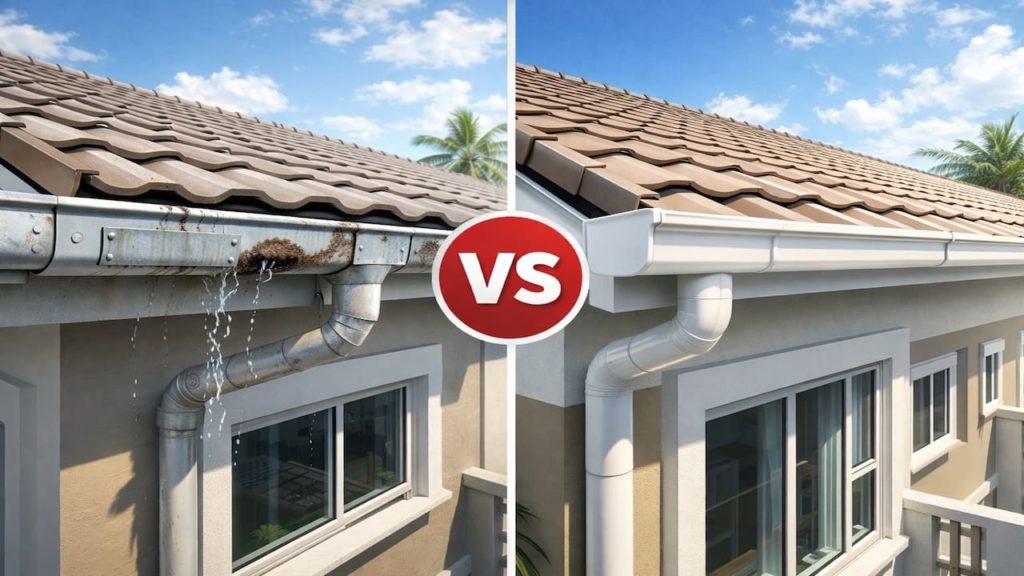
Overflow leaves wide splash marks and wetting across a larger wall area. Joint leaks create a narrow drip line starting at a seam or end cap.
Q4. Should I add a splash guard near the gutter above the unit?
Only after the drainage path is cleared and slope is correct. If you add a guard while a clog remains, you may redirect water into worse places like the soffit edge.
Q5. When should I call a professional?
If the gutter is high, the AC unit mount is already loose, or you suspect water is entering cable holes, get help. Electrical and height risks are not DIY-friendly.
Pro’s Tough Talk

I’ve been on site for 20+ years and handled hundreds of jobs, and overflow near an outdoor AC unit is a classic “bad neighbors” situation. Water and brackets living together is never peaceful in Malaysia storms.
Cause is 3 things: the outlet is packed with grit, the elbow is choked with sludge, or the gutter line is sagging and spilling toward the wall. Steps are 3 too: prove discharge with a controlled pour, clear the outlet and elbow, then redirect discharge and tighten brackets so splash stops. Everybody has the “why is the wall always wet here” moment, and everybody has the “the AC still works so it is fine” moment.
Here’s the rule, stop the splash before it eats the hardware. Water is like a bully with a spray bottle, it keeps hitting the same spot, and corrosion spreads like rust freckles in humid air. One jab: the guy who says “AC outdoor is waterproof” is forgetting the bracket and bolts. Fix the gutter flow now, or your wall will keep showering your AC like it is a pet.
Summary
Overflow near AC outdoor units is usually caused by weak discharge, elbow clogs, or sagging gutters that spill toward the wall. In Malaysia humidity, repeated wetting accelerates corrosion and loosens mounts.
Start by proving outlet flow and clearing grit and sludge at the outlet and first elbow, then stabilize gutter slope and redirect discharge away from the unit. Seal wall penetrations and monitor bracket stability.
Run the controlled pour test above the unit this week—one strong drainage path protects brackets and wiring and storms become less stressful.