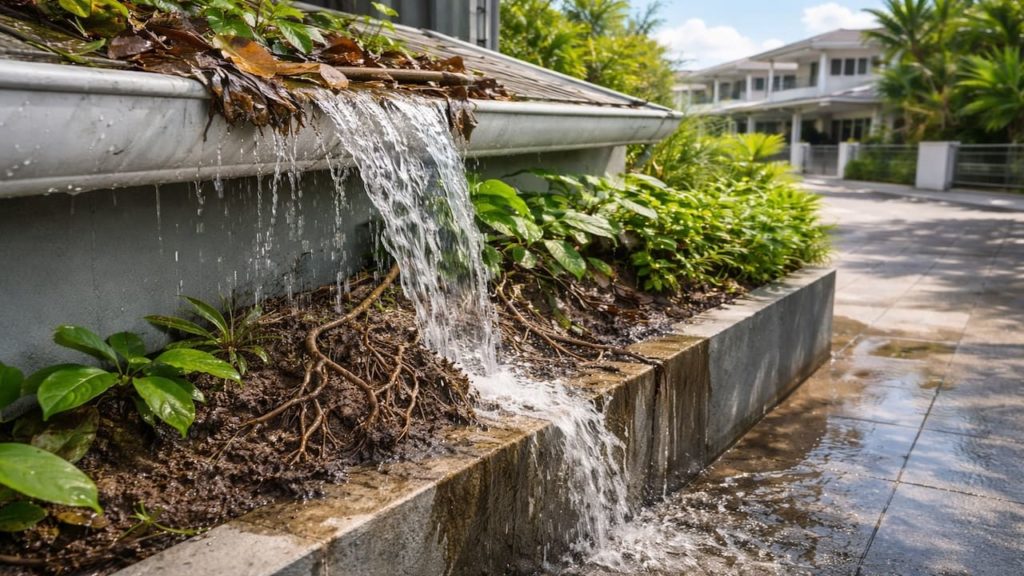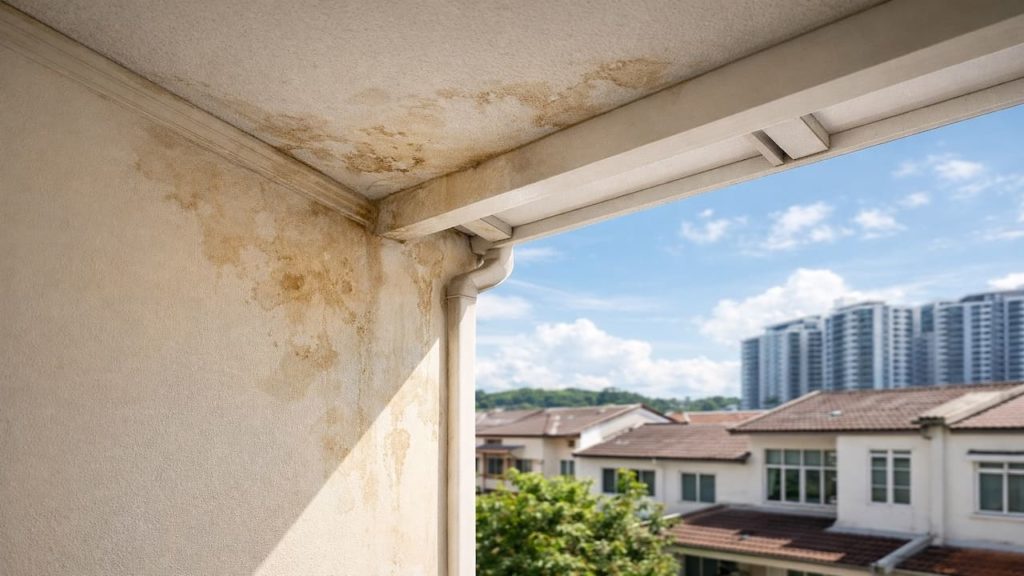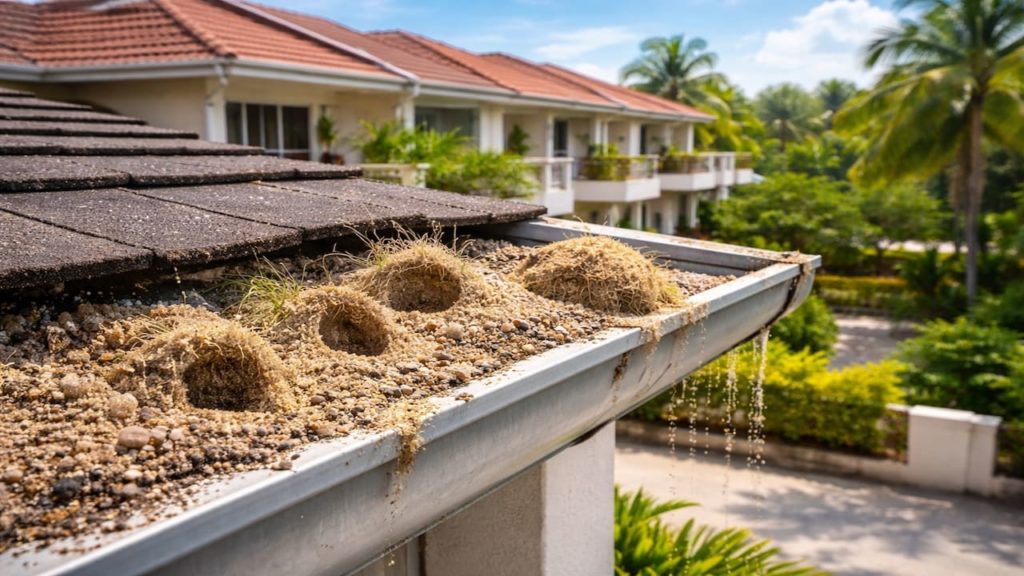
You look into the gutter and see no big leaves, yet it still overflows during Malaysia downpours like the water has nowhere to go.
In hot humid weather, fine sand, roof grit, and tiny debris can build up like mud, and that “invisible” clog blocks outlets and elbows fast. Hidden clog.
In this guide, you’ll learn the 5 no leaf overflow causes driven by sand and roof grit so you can spot the real blockage, restore flow, and stop repeat spills.

Hi, I’m Ken. I write practical home guides for Malaysia—no fluff, just what works.
I hold a formal building design qualification and have spent about 20 years on job sites across hundreds of projects. My goal is simple: help you avoid costly mistakes with clear, safe steps—a quick way to decide what to do next.
1. Gutter overflow with no leaves: 5 causes
No leaf overflow usually means fine debris is blocking the outlet or pipe because sand packs tighter than leaves and reduces flow fast.
Malaysia rain hits hard, and when water carries roof grit, it settles in low spots and bends. The gutter can look clean from above, but the flow path is choked. Quiet blockage.
- Sand nest at the outlet opening that looks flat but acts like a plug
- Roof grit sludge ring inside the first downpipe elbow reducing diameter
- Low slope section where fine sediment settles and slowly forms a dam
- Blocked ground drain causing backpressure up the downpipe and overflow upstream
- Undersized outlet or downpipe for the roof corner volume during peak bursts
You might assume a guard is needed because you think debris is “leaf based.” But this is not a leaf problem. It is a fine sediment problem, and the fix is different.
2. Sand nests and roof grit buildup
Sand nests form when fine particles settle and bind into wet cement and Malaysia humidity keeps it sticky between storms.
Roof tiles shed grit, nearby roads throw dust, and wind pushes it into gutters. When it gets wet, it compacts at outlets and corners and becomes a hard mass. Cement-like. This is why you see overflow with no leaves.
- Check the outlet from above and scrape gently to see if a firm sand layer is present
- Look for a smooth flat “floor” near the outlet that is actually compacted sediment
- Inspect the first elbow bend for heavy dull sound when tapped lightly
- Watch discharge water for brown sandy bursts that suggest sediment release
- Check roof valleys feeding the gutter because they dump grit into one corner
You may think a hose flush will clear it, but strong flushing can push sand deeper into the elbow and make it worse. Scoop first, then flush gently.
3. Why fine debris causes overflow even when gutters look clean
Fine debris hides because it sits low and coats the base and the water level only needs to rise slightly to overflow the lip.
Leaves are obvious, but sand is not. A thin layer reduces the effective depth, so peak rain fills the gutter faster and spills. Malaysia storms are perfect for exposing this. Capacity loss.
- Thin sediment layer reduces cross section and raises water level during bursts
- Sand collects at corners where flow slows and creates a mini dam
- Elbow restrictions create backpressure that lifts water level at the gutter outlet
- Sagging bracket lines hold wet sediment and accelerate compaction
- Ground drain blocks cause slow discharge that looks like normal drip after rain
You might think the gutter size is wrong, but many times it is just clogged by fine sediment. Restore flow first and you often regain enough capacity.
4. How to clear sand clogs without creating new problems
Clear sediment by scooping and opening elbows not by blasting so the sand exits the system instead of migrating into hidden bends.
Work in a dry window, avoid wet ladders, and do not climb in Malaysia humidity when surfaces are slick. Safety first. Use a staged approach and confirm discharge strength at each step. Controlled work.
- Scoop sediment into a bag and avoid pushing it toward the outlet like a snowplow
- Scrape the outlet area gently to remove the compacted sand layer
- Open and rinse the first downpipe elbow where sand commonly settles
- Flush gently with a controlled pour and watch for strong clean discharge
- Retest after 10 minutes and confirm no pooling remains in the gutter section
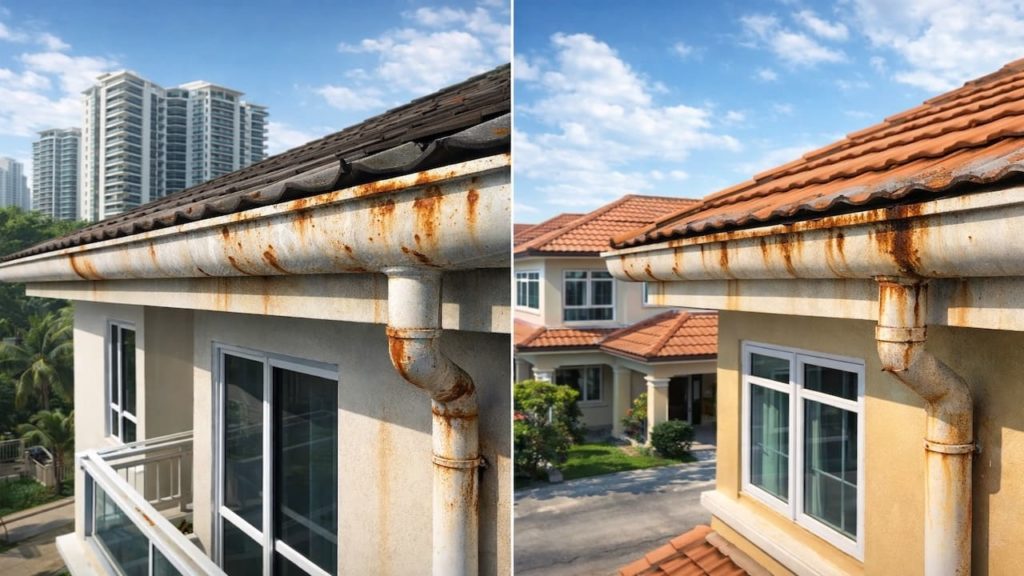
You might feel tempted to use chemicals to “dissolve” grime, but sediment is not grease. Mechanical removal is the reliable fix, and it reduces future rust too.
5. FAQs
Quick answers for overflow with no leaves in Malaysia, so you can focus on sand nests and roof grit instead of wasting time hunting for leaves.
Q1. Why does my gutter overflow when there are no leaves?
Fine sand and roof grit can block outlets and elbows while looking invisible from above. Even a thin sediment layer reduces capacity and causes overflow in heavy rain.
Q2. Where is the most common sand clog point?
Right at the outlet opening and inside the first downpipe elbow. Those are the slow points where sand settles and compacts.
Q3. Can gutter guards stop sand problems?
Not always, because sand can pass through many guards and still settle at outlets. Outlet and elbow cleaning matters more than guards when fine sediment is the main debris.
Q4. How do I test if the downpipe is restricted by sand?
Do a controlled pour near the outlet and watch if water rises quickly in the gutter. If discharge is weak or gurgly, the elbow likely has sediment buildup.
Q5. How often should I check for grit buildup?
If your area is dusty or your roof sheds grit, check outlets more often during rainy season. A quick outlet scrape can prevent a full overflow event.
Pro’s Tough Talk

I’ve been on site for 20+ years and handled hundreds of jobs, and “no leaves but overflow” is the sand nest special. Malaysia dust plus rain turns your outlet into a tiny concrete plug.
Cause is 3 things: compacted sand at the outlet, a sludge ring in the elbow, or a ground drain that is slow and pushes water back up. Steps are 3 too: scoop the sediment first, open and clear the elbow, then do a controlled pour test until discharge runs strong. Everybody has the “it looks clean” assumption, and everybody has the “why is it overflowing” shock.
Here’s the truth, sand clogs are quieter and nastier than leaves. Water is like traffic at a blocked exit, it backs up fast, and sediment sticks like wet cement in a narrow groove. One jab: the guy who says “no leaves so it is fine” has never cleaned a downpipe elbow. Clear the sand nest now, or keep watching your gutter spill like it hates you.
Summary
Gutter overflow with no leaves is usually caused by fine sand and roof grit blocking outlets, elbows, or ground drains. In Malaysia humidity, sediment compacts and reduces capacity fast.
Solve it by scooping sediment, clearing the outlet and first elbow, and proving strong discharge with a controlled pour test. Guards help less than targeted cleaning for fine debr