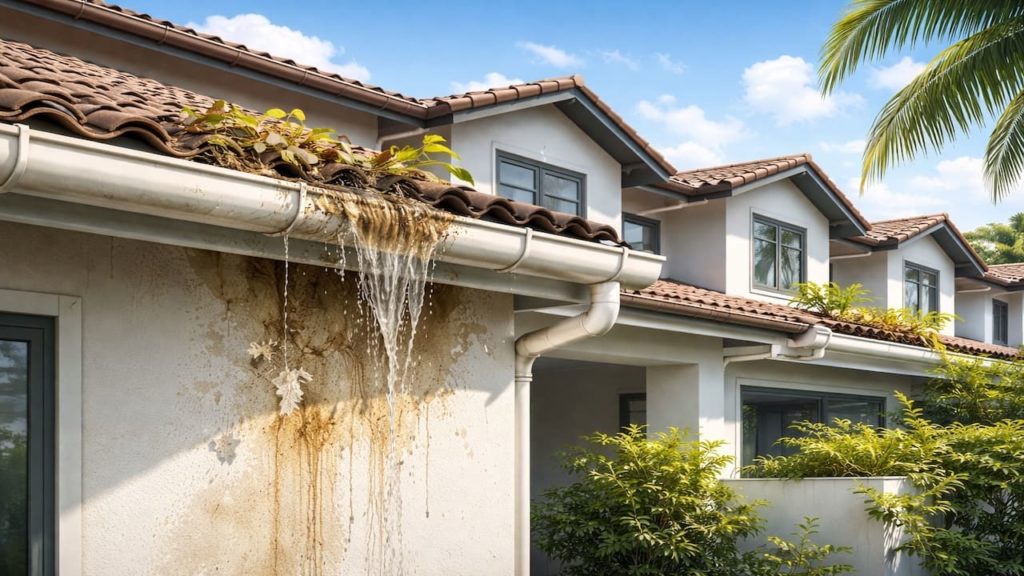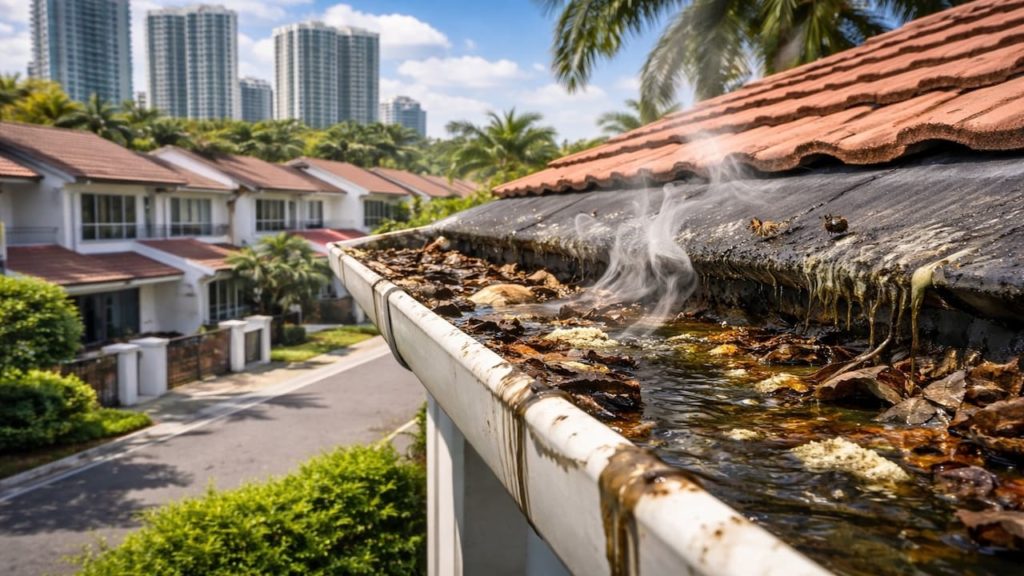
You notice a sour, swampy smell near the roof edge, balcony, or entrance after rain, even when everything looks “mostly fine.”
In Malaysia, constant humidity and sudden storms keep gutters wet, and condos and terrace houses can trap sludge in quiet corners.
In this guide, you’ll learn what makes gutters smell bad and how stagnant water and hidden debris traps create that odor.

Hi, I’m Ken. I write practical home guides for Malaysia—no fluff, just what works.
I hold a formal building design qualification and have spent about 20 years on job sites across hundreds of projects. My goal is simple: help you avoid costly mistakes with clear, safe steps—a quick way to decide what to do next.
1. Gutter smells bad: 5 reasons
Bad gutter smells come from trapped wet organic gunk not from “rain smell” that disappears in an hour.
Malaysia’s heat speeds up bacterial growth, so even a small puddle turns funky fast—especially after several wet days.
- Stagnant water sits in a low spot and grows biofilm and bacteria.
- Leaf sludge decomposes and releases a sour “compost” odor.
- Blocked downpipe keeps water trapped, so it never fully drains.
- Algae mats form in shaded sections and hold moisture constantly.
- Hidden debris at joints and bends creates a wet pocket that never dries.
Some people assume it is “just outside air,” but a gutter odor usually has a physical source. Find the pocket.
2. Stagnant water and hidden debris traps
One small trap zone can stink up the whole area because smell travels down walls and into windows near entrances.
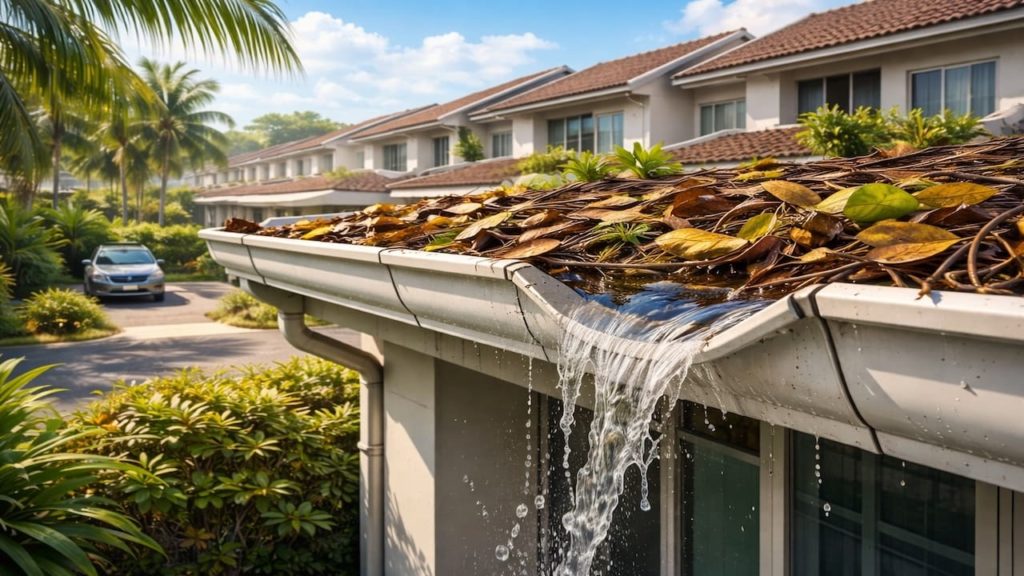
After a Malaysian storm, water may look gone from the top, but sludge can stay underneath and keep fermenting. Nasty surprise.
- Check the lowest dip where sagging makes a tiny “pond” after rain.
- Inspect the downpipe mouth for a leaf plug that holds water upstream.
- Look at joints for a debris dam that creates a mini reservoir.
- Check shaded corners under overhangs where algae grows fastest.
- Sniff-test carefully along the run to locate the strongest odor point.
“I can’t see anything” is common, because the worst stuff hides at bends. Follow the smell and the water marks.
3. Why gutter odor gets worse in Malaysia
Tropical warmth turns gutter sludge into a fast ferment so smells appear sooner than in cooler climates.
Humidity keeps organic debris wet, and wet debris rots. Simple rule.
- High humidity prevents drying, so bacteria stay active for days.
- Heat accelerates decomposition and makes odor compounds stronger.
- Frequent storms keep refilling low spots before they can drain.
- Urban dust and roof grit mix with leaves and create a thick anaerobic mud.
- Insects breed near standing water, and their waste adds to the odor.
This is why “it was fine last month” flips suddenly in rainy season. The system changed.
4. How to remove odor and stop it returning
Remove the wet source and restore full drainage or the smell will return even if you mask it.
Do not spray perfume and call it solved. In Malaysia, the next rain brings the stink back. Guaranteed.
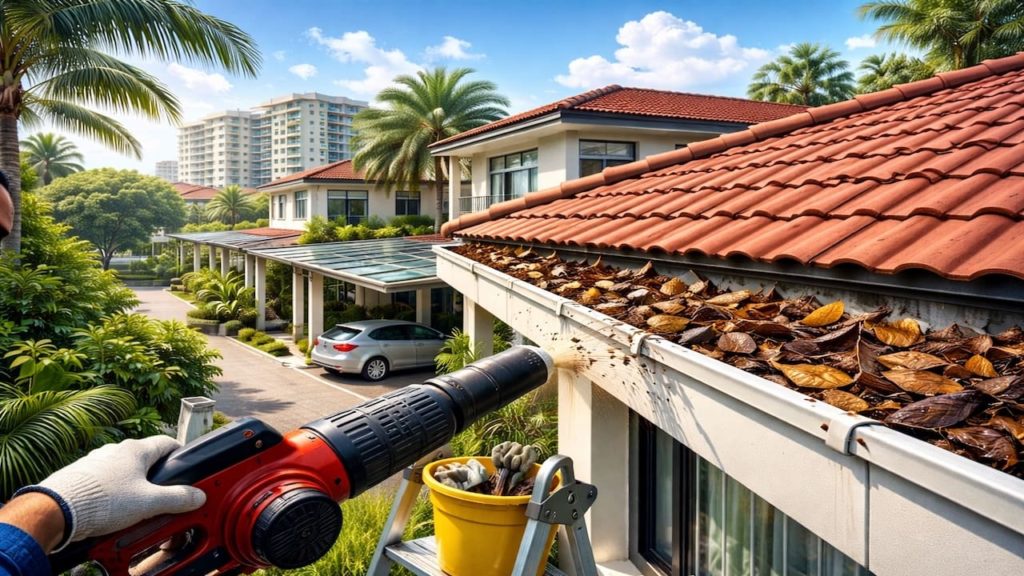
- Clear leaf sludge with gloves and a scoop, starting near the outlet and bends.
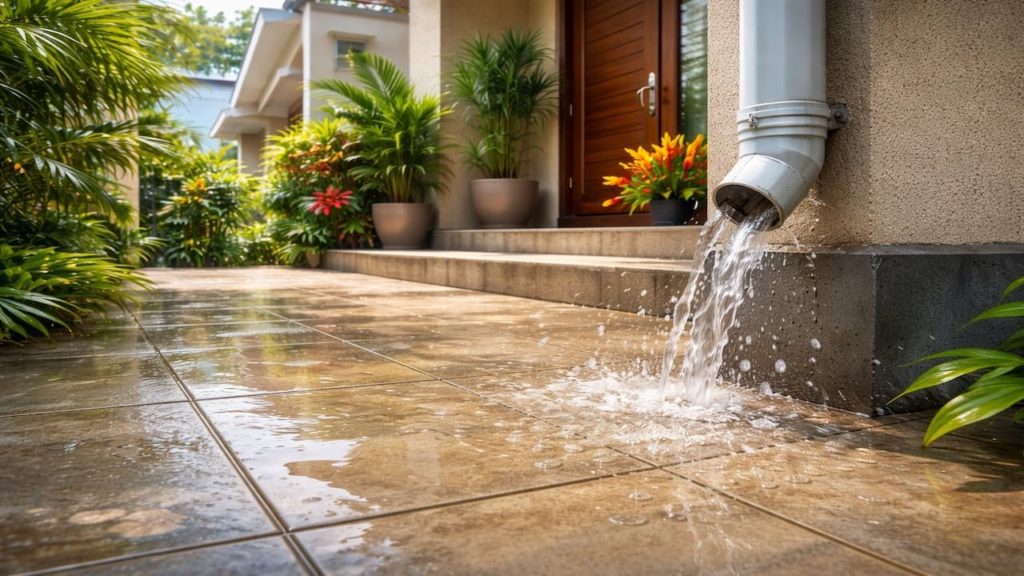
- Flush the gutter run and confirm strong downpipe discharge for at least 30 seconds.
- Fix sagging by tightening or adding brackets so water cannot pond.
- Rinse algae sections, then improve sunlight exposure where possible.
- During wet months, do a quick check every 4 to 6 weeks to prevent buildup.
If smell persists with good flow, check for a hidden crack leaking into a cavity. Another culprit.
5. FAQs
Q1. Is a bad gutter smell a health risk?
Usually it is mainly unpleasant, but it can signal standing water that breeds mosquitoes. In Malaysia, that matters.
Q2. Can bleach fix the smell?
It can reduce odor temporarily, but it does not remove sludge or fix pooling. Physical removal is the real fix.
Q3. Why does it smell worse after rain?
Rain stirs the sludge and pushes odor out, like shaking a dirty bottle. Stagnant pockets are the real source not the rain itself.
Q4. What if I cannot access the gutter safely?
Do not climb in wet conditions. Call a pro, especially for high condo edges or slippery terrace house roofs.
Q5. How do I prevent the smell long term?
Keep outlets and bends clear, stop sagging, and confirm downpipe discharge after big storms. Small routine, big payoff.
Pro’s Tough Talk

I’ve been on site for 20+ years and handled hundreds of gutters in tropical heat and wet-season rain. That bad smell is not “mystery air.” It’s rotten leaf soup sitting somewhere, quietly cooking like a forgotten lunchbox.
Three causes: a sag pond, a downpipe choke, or a bend packed with sludge. Three steps: scoop the wet gunk out, flush until discharge is strong, then fix the low spot so water cannot sit. Like a bathtub, if it never drains, it will stink.
Don’t blame yourself, and don’t call every installer trash, but some gutters are hung like a sad hammock. You know the scene: you open the window for “fresh air,” and you get swamp perfume instead, and you go “seriously?” Kill the stagnant pocket and the smell dies or keep living next to your own outdoor rubbish tea.
Summary
Gutter odor comes from stagnant water and hidden debris traps that rot in humid heat. Malaysia’s climate makes it happen fast.
Find the stink source by checking low spots, bends, joints, and the downpipe mouth, then restore full drainage. Masking odors does nothing.
Clear sludge, flush, and stop pooling this week, then recheck after the next storm. Good flow keeps gutters odor free and next you should read downpipe blockage checks.