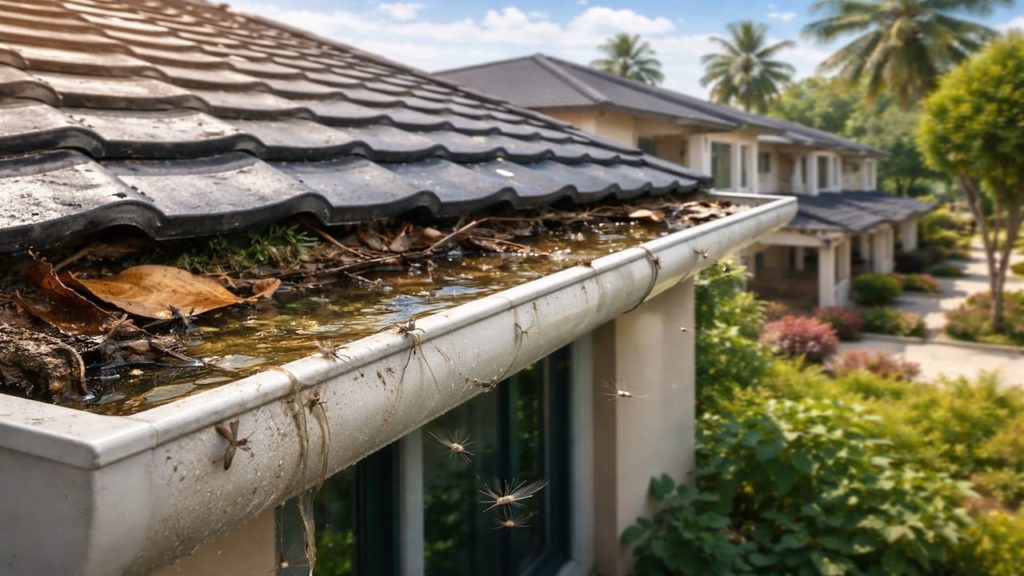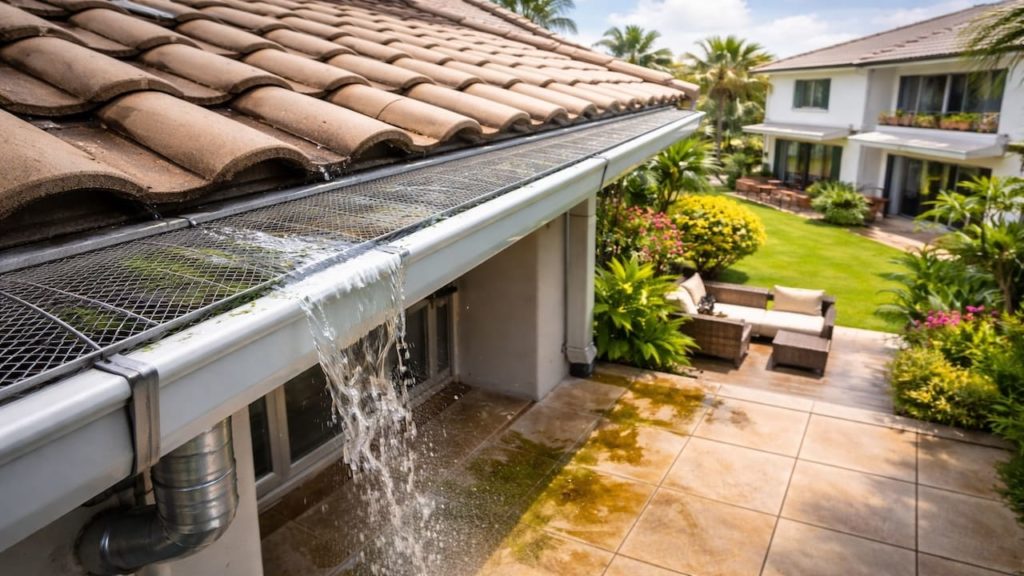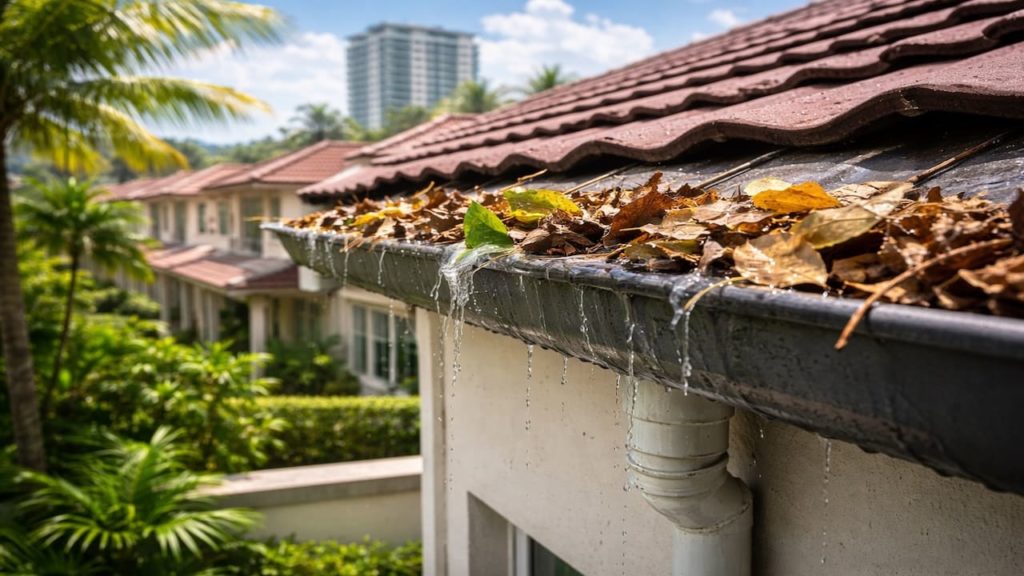
You are dealing with gutter overflow in rainy season, and the sudden downpours in Malaysia make it feel like the roof is dumping a river onto your walls.
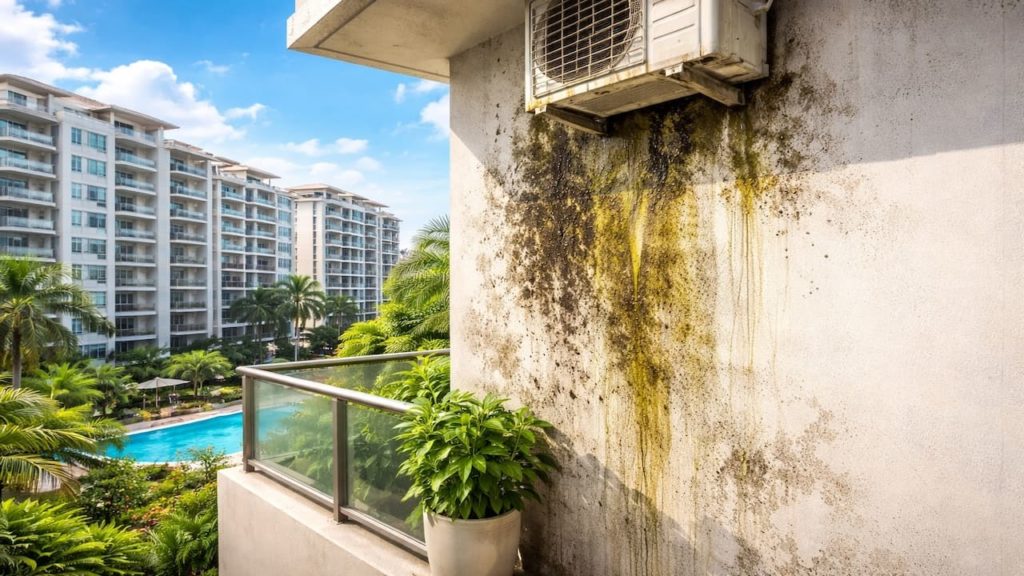
It is rarely just “too much rain” because clogs, slope dips, and weak downpipes turn normal runoff into spillover that stains paint and keeps outdoor tiles slippery. Annoying.
In this guide, you’ll learn 5 practical fixes to stop rainy season gutter overflow by checking the real choke points, restoring fast flow, and keeping runoff controlled in humid weather.

Hi, I’m Ken. I write practical home guides for Malaysia—no fluff, just what works.
I hold a formal building design qualification and have spent about 20 years on job sites across hundreds of projects. My goal is simple: help you avoid costly mistakes with clear, safe steps—a quick way to decide what to do next.
1. Gutter overflow in rainy season: 5 fixes
Stop rainy season overflow by restoring fast exit at the outlet.
Malaysia storms push peak flow into gutters within minutes, so even small grit buildup can raise water level and spill over the lip. Quick action beats perfect cleaning—focus on flow proof first. Safety.
- Clear outlet screens and corner sludge now
- Flush downpipe with controlled pour test today
- Tighten loose brackets to stop gutter sagging
- Add temporary splash deflector at spill point
- Check roof valley exit directing excess water
You might think new sealant will solve everything, but sealant cannot beat a backed up gutter. Clear the choke points first, then seal any true weeps—overflow stops when water exits fast.
2. Handle sudden downpours in Malaysia
Handle sudden downpours by reducing water backup time.
When rain hits hard and wind blows sideways, overflow turns into spray that wets soffits, windows, and door frames. In humid heat, those wet zones stay damp longer—so even brief overflow becomes stains and algae. Control.
- Watch overflow direction during first heavy rain
- Mark the first spill spot on wall
- Clear ground drain to prevent discharge backflow
- Extend downpipe outlet away from walkways
- Remove roof grit from gutter corners weekly
Some people say overflow is unavoidable in tropical rain, but that is usually an excuse. If discharge stays strong, the gutter can handle bursts—your goal is shorter backup time, not zero water.
3. Why rainy season overflow keeps happening
Overflow repeats because hidden restrictions return before you notice.
Fine sand, roof grit, and sludge settle at outlets and elbows, and Malaysia humidity turns that mix into sticky paste. Add a small slope dip and water sits, then every downpour restarts the same spill. Predictable.
- Check outlet mouth for compacted sand plug
- Inspect first elbow for sludge ring buildup
- Look for dirt line showing standing water
- Check bracket spacing causing low spot dip
- Confirm gutter slope still falls to outlet
You might believe you already cleaned it, so it cannot clog again, but rainy season re-packs grit quickly. The fix is routine flow checks—find the restriction early and overflow stops repeating.
4. How to stabilize drainage before the next storm
Stabilize drainage by proving discharge and correcting slope dips.
Pick a dry window because wet ladders and slick tiles are dangerous in Malaysia humidity. Start with a controlled pour test, then fix the first elbow and bracket support so water cannot pond. Method.
- Do controlled pour test near problem outlet
- Stop test if water level rises fast
- Open elbow joint and remove packed sludge
- Add bracket support under sagging section
- Retest and confirm strong clean discharge flow
You may want to buy guards and accessories right away, but they do not fix a weak discharge path. Prove flow first, then add extras—stable drainage comes from clear exits and solid slope.
5. FAQs
These quick answers focus on what actually changes overflow behavior during Malaysia downpours, so you can prioritize the checks that prevent stains and slippery surfaces.
Q1. Why does my gutter overflow only during heavy rain?
Peak flow exposes restrictions that light rain does not reveal, especially at outlets and elbows. A small slope dip can also hold water until the surge arrives.
Q2. What is the fastest check I can do today?
Do a controlled pour near the outlet and watch how quickly the downpipe discharges. Fast rising water means a hidden elbow restriction and clearing it often reduces overflow immediately.
Q3. Can overflow cause damp patches inside the house?
Yes, repeated wetting can soak fascia and soffit edges, then moisture shows up as ceiling edge stains in humid weather. Stop overflow first, then let the structure dry fully.
Q4. Should I reseal gutter seams during rainy season?
Only after you confirm water is not backing up, because overflow pressure can defeat fresh sealant. Seal clean dry joints during a dry window and retest after the next rain.
Q5. When should I call a professional?
If access is high, the gutter line is warped, or overflow is wetting wiring, ceilings, or wall interiors, get help. Height work plus hidden damp is not worth the risk.
Pro’s Tough Talk

I’ve been on site for 20+ years and handled hundreds of jobs, and rainy season overflow is the same trap every year. People wait until the first big downpour, then suddenly the gutter is “broken.”
Cause is 3 buckets: outlet packed with grit, elbow choked with sludge, and a sagging run that makes a small pond. Steps are 3 too: prove discharge with a controlled pour, clear the outlet and elbow by hand, then tighten brackets so slope stays honest. Everybody has the “it looks clean from below” moment, and everybody has the “why is the porch wet again” moment.
Here’s the deal, overflow stops when the exit stays clear and the slope stays true. Water behaves like traffic at a jammed exit, and sludge clings like wet cement inside a bend. One jab: if you only blame the rain, you are letting a clog bully your house.
Summary
Rainy season overflow usually comes from outlet and elbow restrictions, slope dips, and weak discharge that cannot clear peak flow during sudden downpours. Malaysia humidity makes the damage linger.
Use a controlled pour test to prove discharge, clear the first elbow, tighten brackets to remove low spots, and redirect discharge away from walkways and walls. Fix flow before sealant.
Do the outlet and elbow check this week—one strong discharge path keeps gutters calm all season and prevents stains, damp patches, and slippery splash zones.