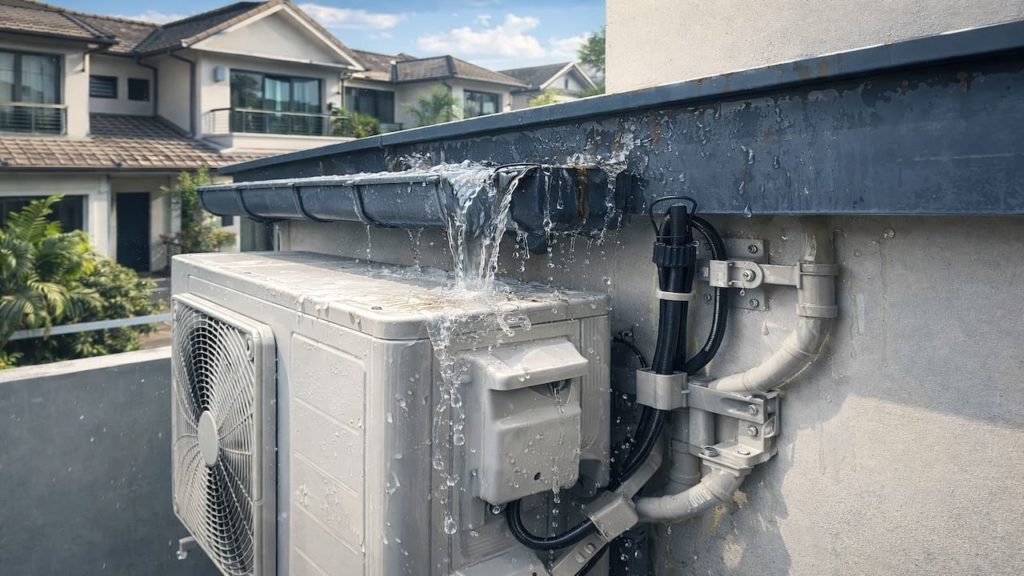
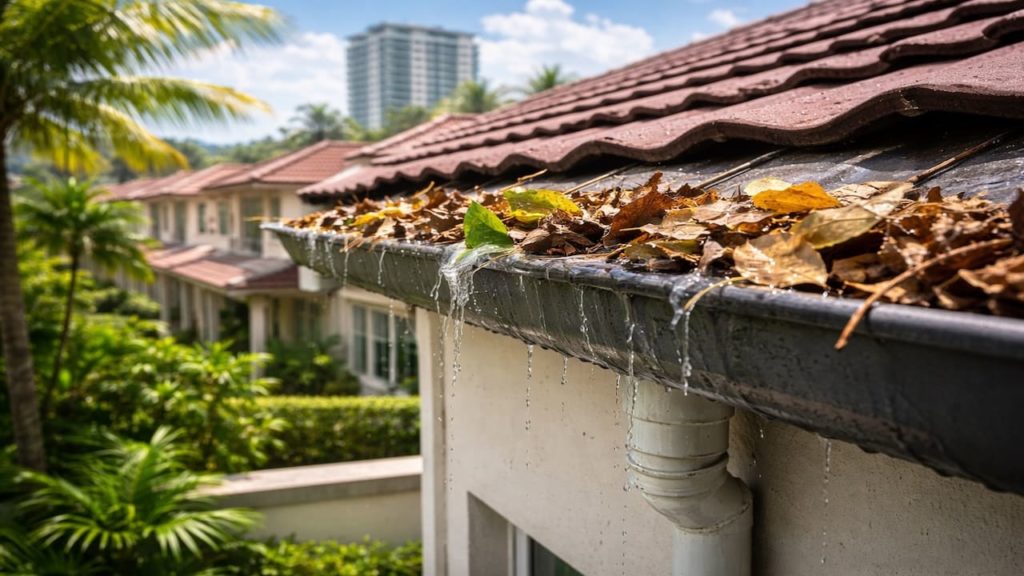
You cleaned the gutter, felt relieved, and then it overflowed again like nothing changed after the next Malaysia downpour.
In humid heat and sudden rain, cleaning can shift debris into the outlet or downpipe, so the line reblocks and the overflow returns in a new spot. Classic trap.
In this guide, you’ll learn the 5 reasons gutters overflow after cleaning so you can find where debris moved, reopen the line, and keep flow stable through rainy season.

Hi, I’m Ken. I write practical home guides for Malaysia—no fluff, just what works.
I hold a formal building design qualification and have spent about 20 years on job sites across hundreds of projects. My goal is simple: help you avoid costly mistakes with clear, safe steps—a quick way to decide what to do next.
1. Gutter overflow after cleaning: 5 reasons
Overflow after cleaning usually means debris relocated into a choke point so the gutter looks clean but the outlet path is still restricted.
Malaysia rain hits fast, and any partial blockage turns into a backup within minutes. A “clean” trough is not proof of a clear system—flow is the real test. Flow test.
- Debris pushed toward the outlet and packed tighter into the outlet opening
- Sludge slid into a downpipe bend and reduced the pipe diameter
- Fine sand settled into the low spot you did not level or brace
- Ground drain or gully trap was already blocked and caused downpipe backflow
- Water is skipping the gutter lip due to a bent edge or wrong drip edge line
You might think you “did it wrong,” but this happens even with good effort. The fix is not more scrubbing, it is clearing the choke point and confirming flow end to end.
2. Debris moved and reblocked the line
Cleaning often breaks debris into smaller pieces that travel and those pieces reblock the outlet like a plug.
Leaves become pulp, roof grit turns into mud, and Malaysia humidity keeps it sticky. When you flush, it moves downstream and settles at the first bend or narrow point—usually unseen. Hidden plug.
- Check the outlet screen area for compacted pulp right under the opening
- Open the downpipe access point and feel for sludge at the first elbow bend
- Run a controlled pour and watch if water rises immediately near the outlet
- Listen for gurgling which suggests air pockets behind a partial blockage
- Inspect the discharge point for weak flow or brown muddy water surges
Some people jump to installing guards, but guards do not clear an already restricted outlet. Clear the line first, then decide if protection makes sense for your roof debris type.
3. Why overflow can look worse right after a “cleaning” day
Overflow can worsen when cleaning exposes slope and joint weaknesses and rain now pushes more water to the weak point.
Once debris is removed, water runs faster, and any sag or misalignment becomes obvious. Heat expansion and rain cooling also stress joints in Malaysia, so a barely-holding seam may start leaking now. Timing illusion.
- Low spot revealed because water no longer spreads evenly along the gutter
- Loose bracket letting the gutter tilt and spill at one corner in heavy rain
- Joint sealant cracked and started weeping after the flush and dry cycle
- Outlet size too small for roof area during peak downpours
- Roof drip edge issue causing runoff to overshoot into free-fall and splash
You may blame the weather, and storms are real, but the pattern is consistent. If overflow is repeatable, there is a physical restriction or shape problem that can be corrected.
4. How to clean without reblocking and how to fix it fast
Clean in stages and prove flow at every stage so debris exits the system instead of migrating into the downpipe.
Do not blast everything toward one outlet at once, especially in Malaysia where sludge turns sticky. Safety matters too, because wet ladders and tiles are risky. Controlled work.
- Scoop debris into a bag first and avoid pushing large clumps toward the outlet
- Flush short sections and stop if water backs up so you do not pack the plug tighter
- Clear the outlet opening by hand then flush again with a small steady pour
- Open and rinse the downpipe elbow area where sludge commonly settles
- Finish by checking discharge flow and confirming no standing water remains
You might feel this is “too much for a simple clean,” but this is what makes it last. One correct flow check saves repeat cleaning and prevents wall stains and damp problems.
5. FAQs
Quick answers for overflow after cleaning in Malaysia, so you can identify the reblock point before the next heavy rain proves it again.
Q1. Why did it overflow right after I cleaned it?
Debris often moves into the outlet or downpipe bend during cleaning, creating a hidden plug. The gutter looks clean, but flow is still restricted.
Q2. How can I confirm the blockage is in the downpipe?
Do a controlled pour near the outlet and watch if the level rises fast. If you hear gurgling or see weak discharge, the bend or ground drain may be blocked.
Q3. Should I flush harder with a hose to clear it?
Not always, because strong flushing can pack pulp tighter into narrow points. Start with hand clearing at the outlet and elbow, then flush gently to confirm flow.
Q4. Is this a sign I need a bigger downpipe?
Sometimes, but only after the line is confirmed clear and overflow still happens in peak rain. Clear the line before you upgrade parts or you may solve the wrong problem.
Q5. How often should I clean in rainy season?
If you have trees or heavy roof grit, check more frequently and focus on outlets and elbows. A quick outlet check can prevent a full reblock in humid weather.
Pro’s Tough Talk

I’ve been on site for 20+ years and handled hundreds of jobs, and “overflow after cleaning” is not bad luck. It is debris migration, the same dumb movie with a new actor every rainy season.
Cause is 3 things: you pushed junk into the outlet, sludge parked itself in the first downpipe bend, or the ground drain was already choking and pushed water back up. Steps are 3 too: clear the outlet by hand, open and rinse the elbow, then do a controlled pour test until discharge is strong. Everybody has that “I cleaned it yesterday” complaint, and everybody has that “why is it worse now” face.
Listen, cleaning that does not prove flow is just rearranging dirt. Water is like traffic at a toll booth, one blocked lane jams everything, and mud is like chewing gum in a keyhole. One jab: the “just blast it with a hose” guy is the reason you are cleaning twice. Do it right, or keep paying the rainy season tax with your time.
Summary
Overflow after cleaning usually means debris moved and reblocked the outlet, elbow, or ground drain, even if the gutter trough looks clean. Flow is the proof.
Fix it by clearing choke points in stages and testing discharge strength. If overflow continues after a confirmed clear line, then consider slope or capacity upgrades.
Do the outlet and elbow check today, then retest with a controlled pour—one flow test saves repeat mess and you can move on to the next home guide.