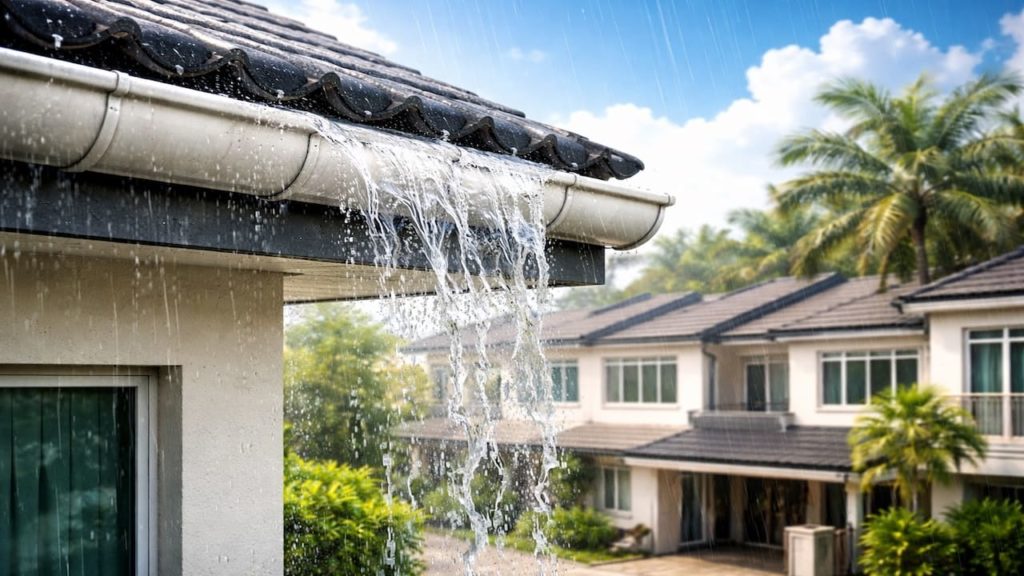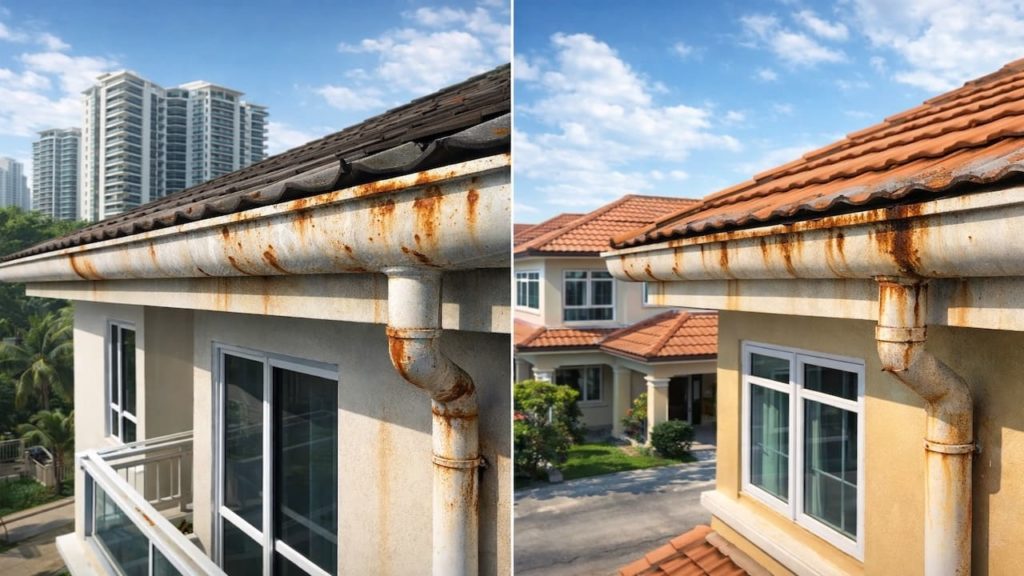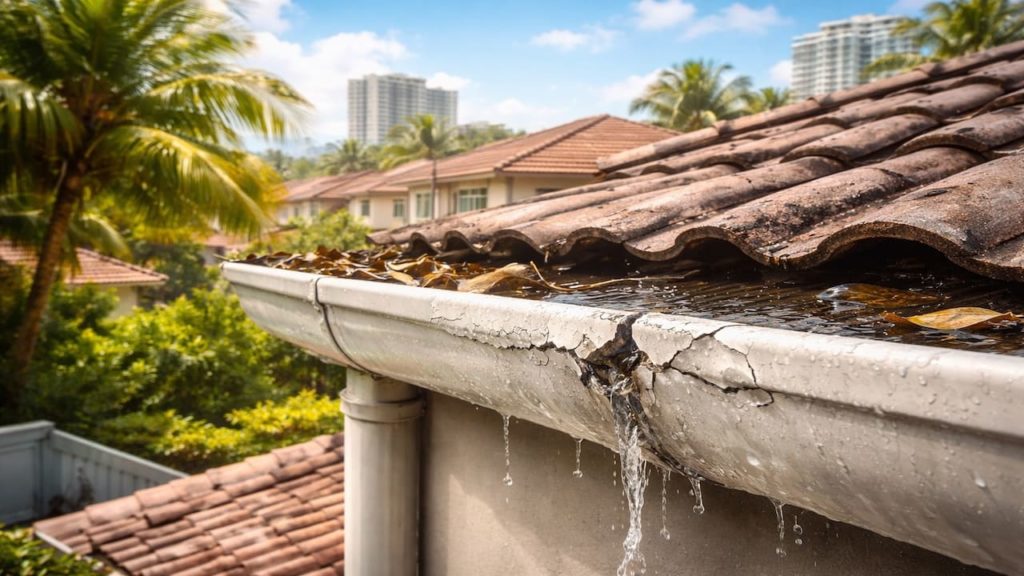
You see small drips at the gutter seam, a dark wet line along the joint, or fresh wall streaks right after a heavy rain.
In Malaysia, hot sun expands materials, wet-season rain loads gutters hard, and humidity keeps seams damp longer on condos and terrace houses. Tough conditions.
In this guide, you’ll learn why gutter seam sealant fails and how heat, rain, and age break joints so you can stop repeat leaks fast.

Hi, I’m Ken. I write practical home guides for Malaysia—no fluff, just what works.
I hold a formal building design qualification and have spent about 20 years on job sites across hundreds of projects. My goal is simple: help you avoid costly mistakes with clear, safe steps—a quick way to decide what to do next.
1. Gutter seam sealant fails: 5 reasons
Sealant fails when the joint keeps moving and water pressure hits the seam during peak storm minutes.
Malaysia weather creates constant expansion and contraction, then a sudden downpour fills the gutter and forces water into tiny gaps. Sealant is not magic. If the surface is dirty or wet, it also never bonds well. Common failure.
- UV and heat bake the sealant so it hardens, shrinks, and pulls away from the seam edge.
- Rain surges raise gutter water level, pushing water under weak spots and lifting the bead.
- Dirty seams with algae film prevent bonding, so the sealant peels like tape on oil.
- Loose clips or brackets let the joint flex, cracking the sealant line over time.
- Ponding from wrong slope keeps the seam wet for hours and accelerates breakdown.
Some people blame “bad sealant,” but the real cause is usually movement plus moisture plus poor prep. Fix the conditions and sealant finally holds.
2. Heat rain and age break joints
Storm cycles stress the seam more than you expect because materials expand in sun and then get shocked by cold rain.
In Malaysia, the gutter can be hot in the afternoon, then a storm hits and cools it fast—micro-gaps open and close. Over months, that flex works the sealant. Age also matters, because old sealant loses elasticity and becomes brittle. Simple aging.
- Hot day expansion pushes seam edges apart, then cooling contracts and creates repeated shear.
- Wind-driven rain adds sideways force, forcing water into the seam line.
- Debris dams at joints hold water at the seam, acting like a wet sponge on the sealant.
- Long condo runs flex more, so joints act like hinges during peak flow.
- Terrace house roof valleys dump sudden volume, raising seam pressure quickly.
You might think a tiny drip is harmless, but repeated wetting stains walls and can invite mold in humid air. Fix it early and the damage stays small.
3. Why sealant failure keeps returning
It returns when you seal over wet grime or when the joint is still loose and keeps flexing under storm load.
Malaysia humidity makes surfaces feel dry when they are still damp, and that ruins bonding. Also, sealant alone cannot compensate for a gap created by misalignment. Mechanics first, sealant second. Order matters.
- Old sealant is not removed, so the new bead bonds to weak material, not to the gutter.
- Water remains in the seam area because slope is wrong or the gutter sags near the joint.
- Clips are loose, so the seam moves every time the gutter fills and empties.
- Wrong product is used for outdoor water exposure, so it degrades under UV and rain.
- Rushed curing time gets interrupted by another storm, so the bead never sets properly.
This is why “I sealed it last month” is a common complaint. If you do not fix movement and drainage, you are sealing the symptom, not the cause.
4. How to make seam sealant last longer
Make the joint stable and dry before sealing then confirm drainage so the seam is not sitting wet after every rain.
Choose a dry window and do not rush. In Malaysia wet season, waiting for the right break is part of the job. Prep is everything.
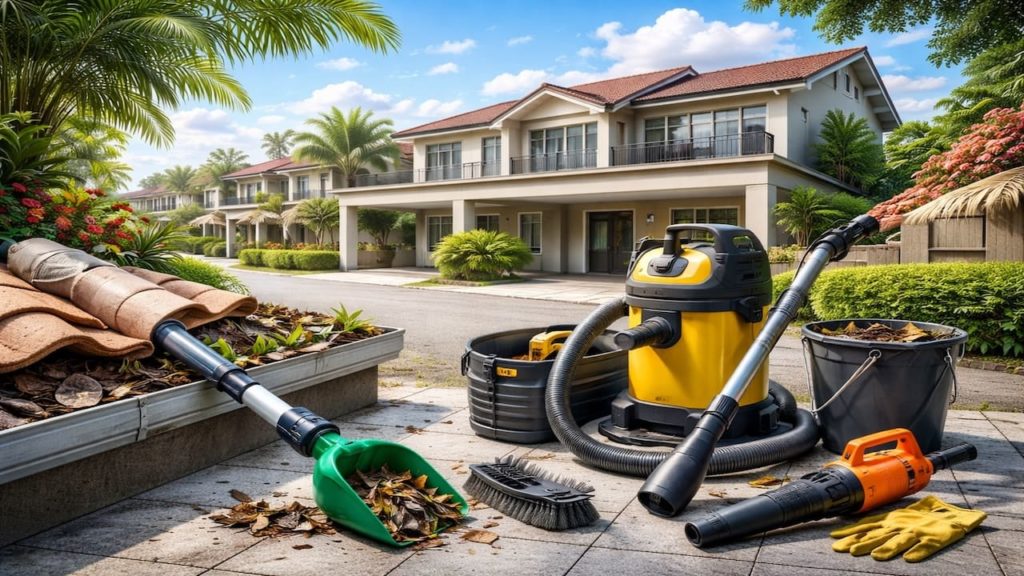
- Remove loose old sealant completely, then scrub algae film and rinse until the surface is clean.
- Dry the seam fully, and wait longer than you think because humidity slows drying.
- Tighten or replace clips and brackets near the joint so the seam cannot flex under load.
- Apply gutter-rated sealant in one continuous bead and smooth it for full contact.
- After curing, run a hose test and confirm no weeping line appears at the seam.
If the connector is warped or cracked, replacement beats resealing. Sealant cannot rebuild broken geometry.
5. FAQs
Q1. Can I reseal a seam during rainy season?
Yes, but only during a dry break with a truly dry seam. If the bead gets wet before curing, it often peels and fails fast.
Q2. Why does the seam leak only in heavy rain?
Heavy rain raises water level and pressure inside the gutter, so the weak point gets forced open. Light rain may not reach that level.
Q3. Should I add more sealant on top of the old bead?
No, remove old loose material first and clean the surface. Bonding to clean dry metal matters most for long life.
Q4. Can sagging gutters cause seam leaks?
Yes, sagging creates ponding that keeps seams wet and adds flex at joints. Support fixes reduce leak recurrence.
Q5. When should I replace the joint connector?
If the seam is warped, cracked, or the gap will not close even after tightening, replace it. Repeated resealing is wasted effort.
Pro’s Tough Talk

I’ve been on site for 20+ years and handled hundreds of gutters in tropical heat and wet-season rain. Seam sealant failing is like a phone screen protector peeling at the corner. You can press it down, but if the corner keeps lifting, it comes back.
Three causes. One, the joint moves because clips are loose or the run sags. Two, you sealed over damp grime and algae, so it never bonded. Three, storms slam the seam with pressure, and old sealant turns brittle. Steps: strip the old bead, dry and clean the seam, then tighten the joint before resealing.
Don’t blame yourself, and don’t call every installer a scam, but some “fixes” are just smearing goo on a wet mess. You know the two classics: it stops dripping for one day, then the next storm laughs at you, and you go “again?” Stabilize the joint then seal or keep playing whack-a-leak like it is your rainy-season hobby.
Summary
Seam sealant fails because heat and UV harden it, storms raise pressure, and joints flex when brackets loosen or slope causes ponding. Malaysia speeds the cycle.
To stop repeat leaks, remove old sealant, clean and dry the seam fully, then tighten support so the joint cannot move. Seal last, not first.
Do one post-storm seam check this week, mark the first drip joint, and reseal only after proper prep. Stable joints stay dry longer and next read about wall stain checks before mold spreads.